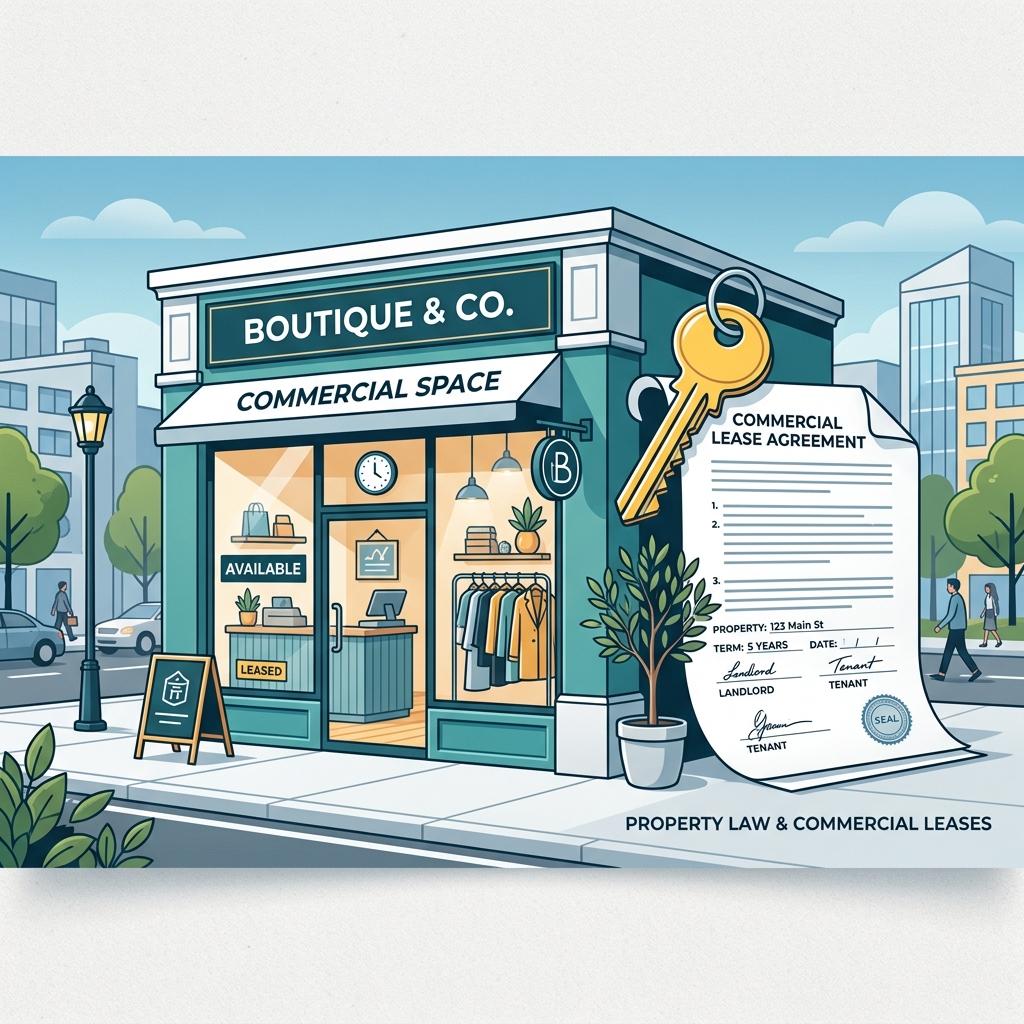
Finding the perfect premises for your business is an exciting milestone, but the legal documents that follow can be daunting. Unlike residential tenancies, commercial leases offer very few statutory protections for the tenant. The principle of "caveat emptor" (buyer beware) applies strongly here. The lease you sign will dictate your business's liabilities for years to come.
Crucial Lease Terms to Understand
Before you sign anything, make sure you thoroughly understand the following terms:
- Term and Break Clauses: The "term" is the length of the lease. A "break clause" gives you (and sometimes the landlord) the right to terminate the lease early on a specific date. This is vital for new businesses that may need to scale up or down unexpectedly.
- Rent Reviews: Most commercial leases longer than a few years will include rent reviews, typically every 3 to 5 years. These are usually "upward only," meaning the rent can increase but will never decrease, even if market values drop.
- Repairing Obligations (FRI): Many commercial leases are "Full Repairing and Insuring" (FRI). This means the tenant is responsible for all repairs, both internal and external (including the roof and structure). If the building is old, an FRI lease can be incredibly costly.
- Alienation (Assignment and Subletting): This clause dictates whether you can transfer the lease to someone else or sublet part of the space if you no longer need it. Landlords usually require consent, which cannot be "unreasonably withheld."
The Importance of a Schedule of Condition
If you are taking on a lease that requires you to keep the property "in good repair," you could be forced to fix existing defects left by a previous tenant. To prevent this, you should negotiate to limit your obligation to keeping the property in "no worse condition" than when you took it on. This must be evidenced by a photographic "Schedule of Condition" attached to the lease.
Always instruct a commercial property solicitor to review and negotiate a lease on your behalf. A small upfront legal fee can save you from catastrophic liabilities down the line.