What Is Planning Permission?
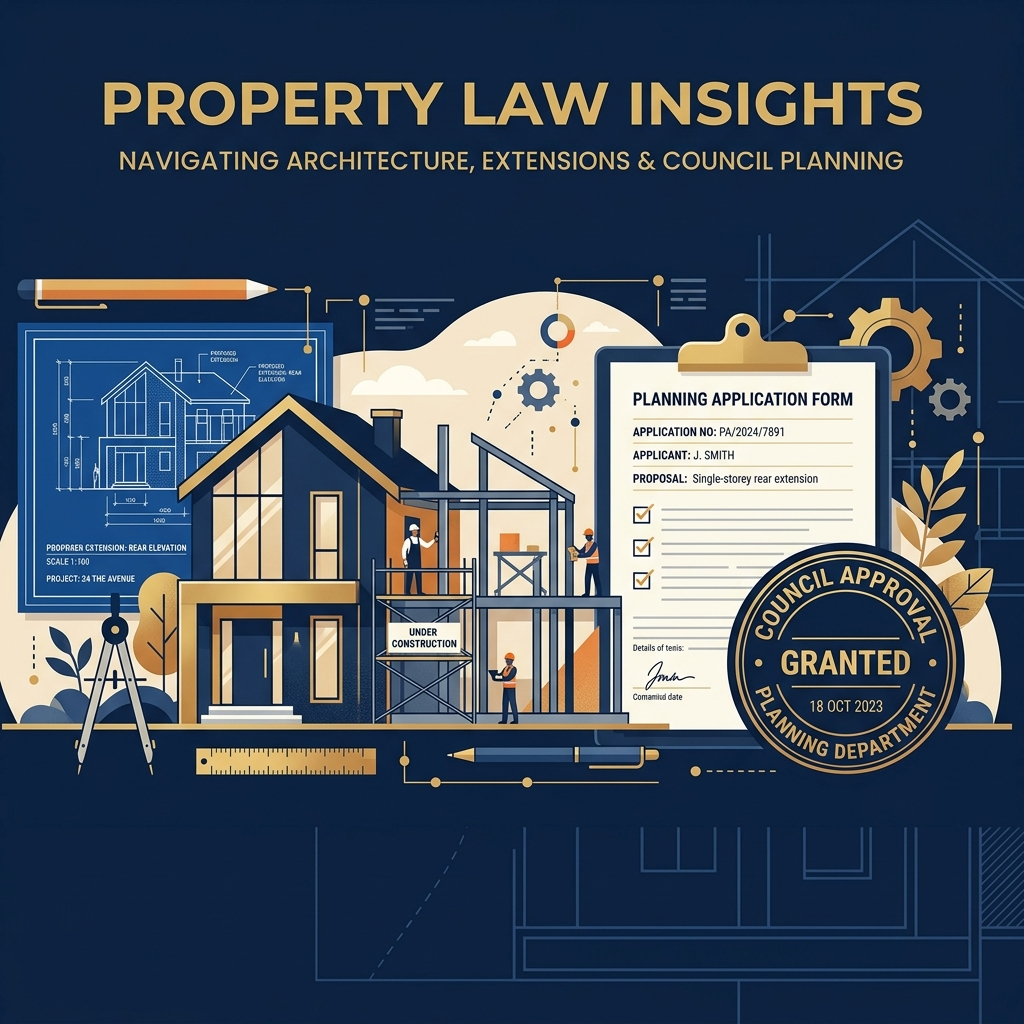
Planning permission is formal consent from your local planning authority (LPA) - usually your local council - to carry out certain types of development. It exists to control how land and buildings are used and to protect communities and the environment from inappropriate development.
Permitted Development Rights
Not every change to your home requires a full planning application. Many minor works fall under Permitted Development (PD) rights, which grant automatic planning permission for certain categories of work, subject to limits and conditions.
Common works covered by PD rights include:
- Single-storey rear extensions (up to 4 metres for detached houses, 3 metres for other houses)
- Loft conversions (adding up to 50m3 for detached/semi-detached, 40m3 for terraces)
- Converting an integral garage
- Installing solar panels
- Building a garden shed or outbuilding (subject to height and footprint limits)
PD rights may be restricted if your property is in a conservation area, National Park, or Area of Outstanding Natural Beauty. They also do not apply to listed buildings or flats.
Lawful Development Certificate
Even if you believe your project falls within PD rights, it is wise to obtain a Lawful Development Certificate (LDC) from the council. An LDC confirms the work is lawful - invaluable when you sell the property.
When You Must Apply for Full Planning Permission
You will need full planning permission for two-storey extensions, new dwellings, changing the use of a building, works to a listed building that affect character, and building beyond PD limits.
How to Apply
- Pre-application advice - Many councils offer paid discussions with a planning officer to test your proposals.
- Submit online - Applications are made via the Planning Portal with site plans and elevations prepared to scale.
- Pay the fee - For a household extension, the fee is currently £258.
- Neighbour consultation - The council notifies neighbours who can comment.
- Decision - The council must decide within 8 weeks for most applications.
Building Regulations: A Separate Requirement
Planning permission and building regulations approval are different. Building regulations ensure your work is structurally sound, thermally efficient, and safe. Most structural work requires building regulations approval even if covered by PD rights. Failure to obtain it can make your property unmortgageable.
What Happens If You Build Without Permission?
The council can serve an enforcement notice requiring you to undo the work at your own expense. Selling a property with an unauthorised structure can be extremely difficult and costly.
Tip: Always check with your local planning authority before starting any significant work. A short conversation can save months of delay and thousands in rectification costs.