What Is an Easement?
An easement is a right enjoyed by the owner of one piece of land (the dominant land) over another piece of land (the servient land). Unlike a licence, an easement is a proprietary right - it attaches to the land itself and binds successive owners regardless of personal relationship.
Common Types of Easement
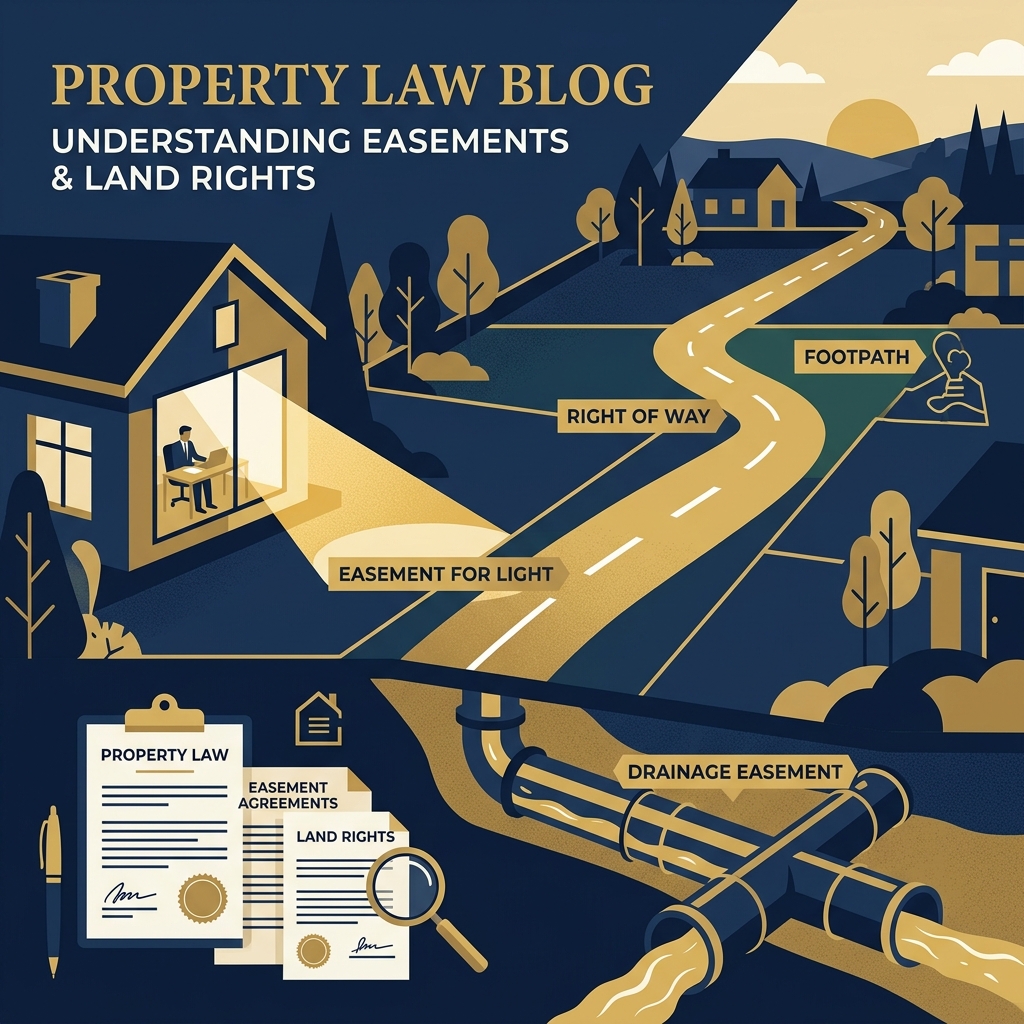
- Right of way - to walk, drive, or cycle across the servient land
- Right of drainage - to run pipes or drains through neighbouring land
- Right of support - for a building to receive structural support from an adjoining wall
- Right to light - the right to receive natural light through a defined aperture
- Right of storage - to store goods on part of the servient land
How Are Easements Created?
Easements can be created expressly (written into a transfer deed), by implication (where the land requires the easement to be used as intended), or by prescription (long use of 20 years or more, openly, without permission).
Public Rights of Way
Public footpaths, bridleways, and byways are not easements but public rights of way. They are recorded on the Definitive Map held by the local highway authority. Landowners cannot obstruct them and must maintain stiles and gates.
Rights to Light
If a window has enjoyed natural light for 20 years or more, the benefiting owner may have a right to light. If a new development would substantially interfere with that light, the right-holder can seek an injunction or damages. Developers sometimes register a Light Obstruction Notice to interrupt the 20-year period.
What Servient Owners Cannot Do
The owner of the servient land cannot block or obstruct an access right, build over a drainage easement without legal authority, or interfere with an easement of support. Doing so risks a court injunction requiring removal of the obstruction at the landowner's cost.
Extinguishing an Easement
Easements can end by formal release (where the dominant owner releases the easement in writing) or by unity of ownership (when the same person buys both the dominant and servient land). Non-use alone is rarely sufficient to extinguish an easement - the courts require evidence of positive intention to abandon.
Buying a property? Always ask your solicitor to check the title for all registered and unregistered easements and rights - both those benefiting and those burdening the property. Discovering a right of way through your garden after completion can be deeply unpleasant.