Why this decision matters more than it looks
When people start a business, they usually think about the product, the customers and the money. The legal structure feels like dull paperwork to sort out later. But the structure you choose quietly decides three very important things: how much personal risk you carry if the business fails, how you are taxed, and how much administration you have to do. Getting it roughly right at the start saves a great deal of pain later.
The names and details vary between countries, but almost everywhere you are choosing along the same spectrum: from simple structures where you and the business are legally the same thing, to more formal ones where the business is a separate legal "person" in its own right.
The sole trader (or sole proprietor)
This is the simplest way to be in business: you, trading as yourself. In most places you can start with little or no formal registration, the paperwork is light, and the profits are simply your income.
The trade-off is unlimited personal liability. Because you and the business are legally the same, business debts are your debts. If the business cannot pay, creditors can generally pursue your personal assets — potentially including your savings and, in the worst cases, your home. For a low-risk activity with few debts, that may be an acceptable trade for the simplicity. For anything that could rack up significant liabilities, it is a serious consideration.
Partnerships
A partnership is two or more people running a business together. In its basic form it is like a shared sole trader arrangement: easy to set up, but with each partner typically carrying personal liability — and, crucially, often being liable for debts the other partners run up. That last point catches many people out. In a simple partnership you may be on the hook for your partner's business decisions, not just your own.
Key point: If you go into business with someone, a written partnership agreement is not optional. It should cover who does what, how profits are split, what happens if someone wants to leave, and how disputes are resolved. The time to agree this is while everyone is still friendly.
Many systems also offer hybrid forms — such as limited partnerships or limited liability partnerships — that mix the flexibility of a partnership with some of the liability protection of a company. If a partnership suits you but the liability worries you, ask specifically about these options.
The company (or corporation)
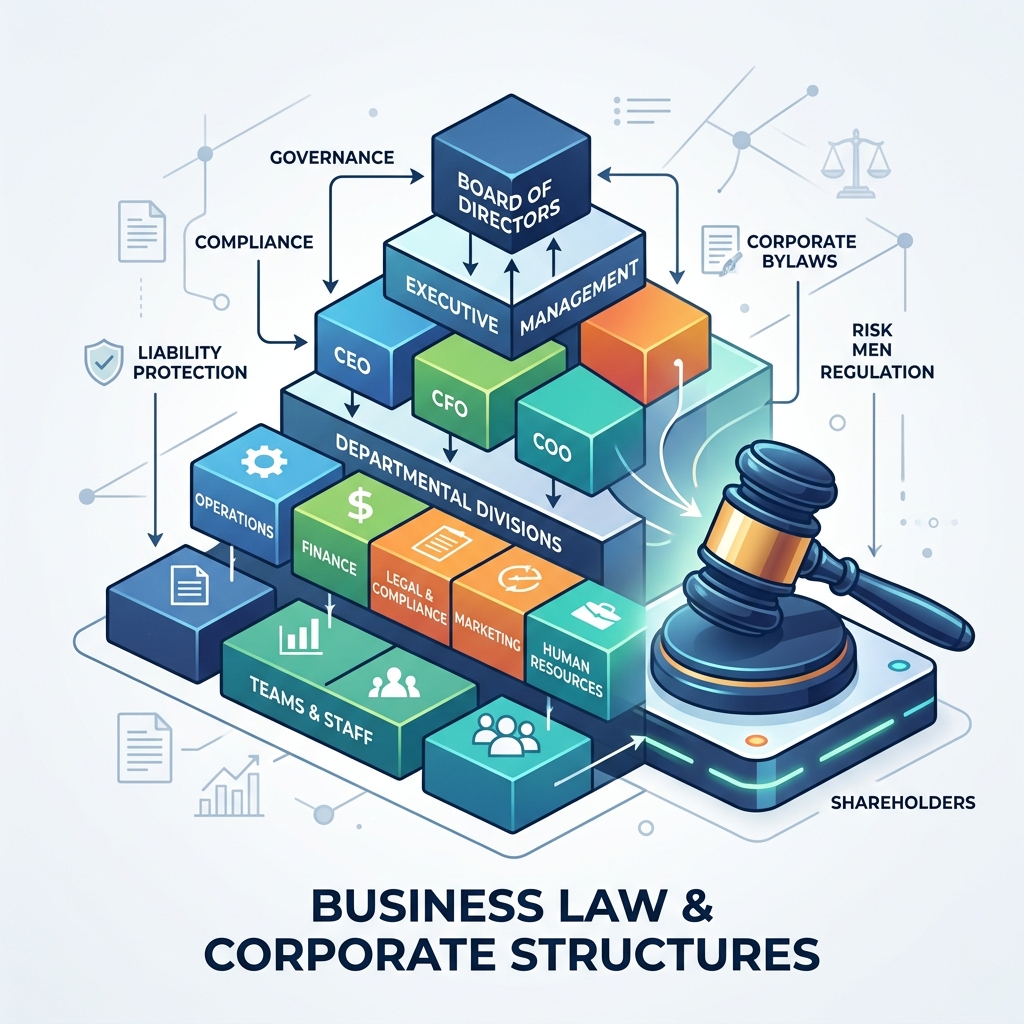
Forming a company creates a separate legal entity: the business becomes a "person" in law, distinct from its owners. This has one headline advantage — limited liability. If the company fails, the owners generally lose only what they invested, and their personal assets are usually protected, provided they have acted properly and honestly.
That protection comes with obligations. Companies typically must register formally, keep proper accounts, file information publicly, and follow rules about how they are run. Directors take on legal duties and can lose their protection if they act dishonestly, trade while insolvent, or give personal guarantees. In practice, lenders often ask small-company owners for a personal guarantee anyway, which can quietly undo some of the liability shield.
How tax fits in
Structure and tax are deeply linked, and this is one of the biggest reasons to take advice. In simple structures, business profit is usually taxed as the owner's personal income. Companies are often taxed as separate entities, and the owners are then taxed again when they take money out — a pattern that can be either an advantage or a disadvantage depending on the amounts and the local rules. There is no universal answer; the maths depends entirely on your country and your numbers.
A simple way to think it through
Ask yourself four questions:
- How much could go wrong? The greater the potential debts and risks, the more valuable limited liability becomes.
- Are you going in with others? If so, a clear agreement matters more than the label you choose.
- How much administration can you tolerate? More protection generally means more paperwork.
- What are your growth plans? If you intend to raise investment or bring in partners, a company structure is often expected.
You are not locked in forever
It is reassuring to know that the first choice is not permanent. Many businesses start simple — as a sole trader — and convert to a company once they grow, take on staff, or face bigger risks. Changing structure has costs and consequences, so it is worth planning, but it is entirely normal and routine.
The bottom line
Your business structure is really a decision about risk, tax and admin, dressed up in legal language. For a small, low-risk venture, simplicity may win; for anything with real liabilities or growth ambitions, the protection of a company often earns its extra paperwork. Because tax and company rules are intensely local, treat this as a framework and speak to an accountant or business lawyer in your country before you register anything.