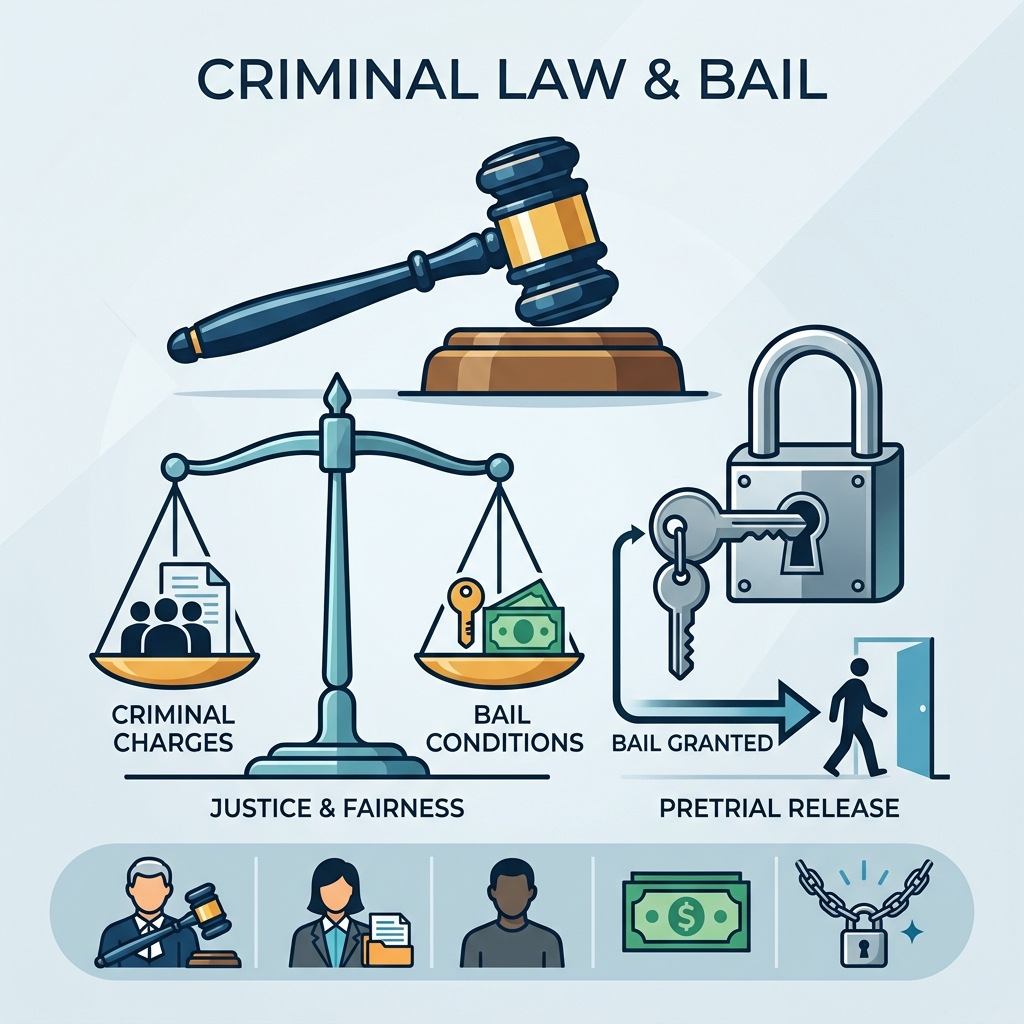
What bail really means
When a person is charged with an offence, there is usually a gap — sometimes weeks, sometimes many months — before their case is decided. Bail is the mechanism that answers a simple but important question during that gap: should this person wait for their day in court at home, or in custody?
Because someone who has only been charged has not been found guilty of anything, most legal systems start from the idea that release is the norm and detention is the exception. But that starting point can be outweighed by concerns about whether the person will return to court, whether they might interfere with the case, or whether they pose a risk to others.
How the decision is made
A court or a designated official weighs a set of familiar factors. The names differ around the world, but the questions are strikingly consistent:
- Will the person come back? Ties to the community — a home, a job, family, a long local history — suggest they will. A lack of ties, or a history of missing court dates, suggests they might not.
- Are they a risk to others? The seriousness of the alleged offence and any history of violence weigh heavily here.
- Might they interfere with the case? For example, by contacting witnesses or destroying evidence.
- Is there a risk of further offending while the case is pending?
Key point: A bail decision is not a verdict. It is a risk assessment about the waiting period, not a judgement about guilt or innocence.
Money bail and other forms of security
In some countries, release often involves money: a sum is set that acts as a financial guarantee the person will return. It may be paid in full, secured against property, or promised as a sum that becomes payable only if the person fails to appear. In other countries, cash bail is rare or has been largely abolished, and courts rely instead on conditions and supervision.
Where money is involved, a third party — often a family member — may put up the security. It is worth understanding, before agreeing to this, that the money or property can genuinely be lost if the released person breaks the rules. Standing as a surety is a real financial commitment, not a formality.
Conditions of release
Bail is often granted with strings attached. Conditions are designed to manage the specific risks the court is worried about. Common ones include:
- Living at a specific address and being contactable there.
- Reporting regularly to a police station or supervising body.
- Surrendering a passport or agreeing not to travel.
- Staying away from named people or places, such as an alleged victim or witness.
- A curfew, sometimes enforced with electronic monitoring.
Conditions should relate to the risk. If you think a condition is unworkable — for instance, a reporting requirement that clashes with a work shift — a lawyer can often ask the court to vary it rather than simply hoping to get away with breaking it.
When bail is refused
Sometimes release is refused and the person is held in custody until trial — often called being held on remand. This is more likely with very serious charges, a strong history of missing court, or a clear ongoing risk to others. Being remanded is not a punishment and does not mean the person has been found guilty; it reflects the court's view of the risks during the waiting period.
A refusal is usually not the final word. Most systems allow the decision to be revisited, especially if circumstances change — for example, if a stable address or a job offer can now be shown, or if the case is being delayed for a long time.
What happens if the rules are broken
Breaking bail conditions, or failing to turn up to court, is taken very seriously. The typical consequences are that the person is arrested again, that release is far less likely a second time, and that any money or property put up as security can be forfeited. In many places, failing to appear is a separate criminal offence on top of the original charge.
If something genuinely goes wrong — illness, a transport failure, a mistaken date — the right move is to contact a lawyer and the court immediately, not to hide. Courts are far more sympathetic to someone who comes forward than to someone who simply vanishes.
Practical steps if you or a family member is seeking bail
- Gather evidence of stability early: proof of address, employment, family responsibilities, community ties.
- Line up a reliable person who can act as a surety or provide a stable address if needed.
- Get legal advice before the first hearing — the first bail application often matters most.
- Be realistic about conditions. Offering sensible conditions can make release easier to grant.
The bottom line
Bail is about managing risk during the wait for trial, not deciding guilt. The stronger the evidence that a person will return and behave responsibly, the more likely release becomes — and the calmer everyone can be about the months ahead. Because the details, especially around money bail, differ enormously between countries, treat this as a general guide and get advice from a lawyer who knows your local system before making decisions.