What Is Freehold?
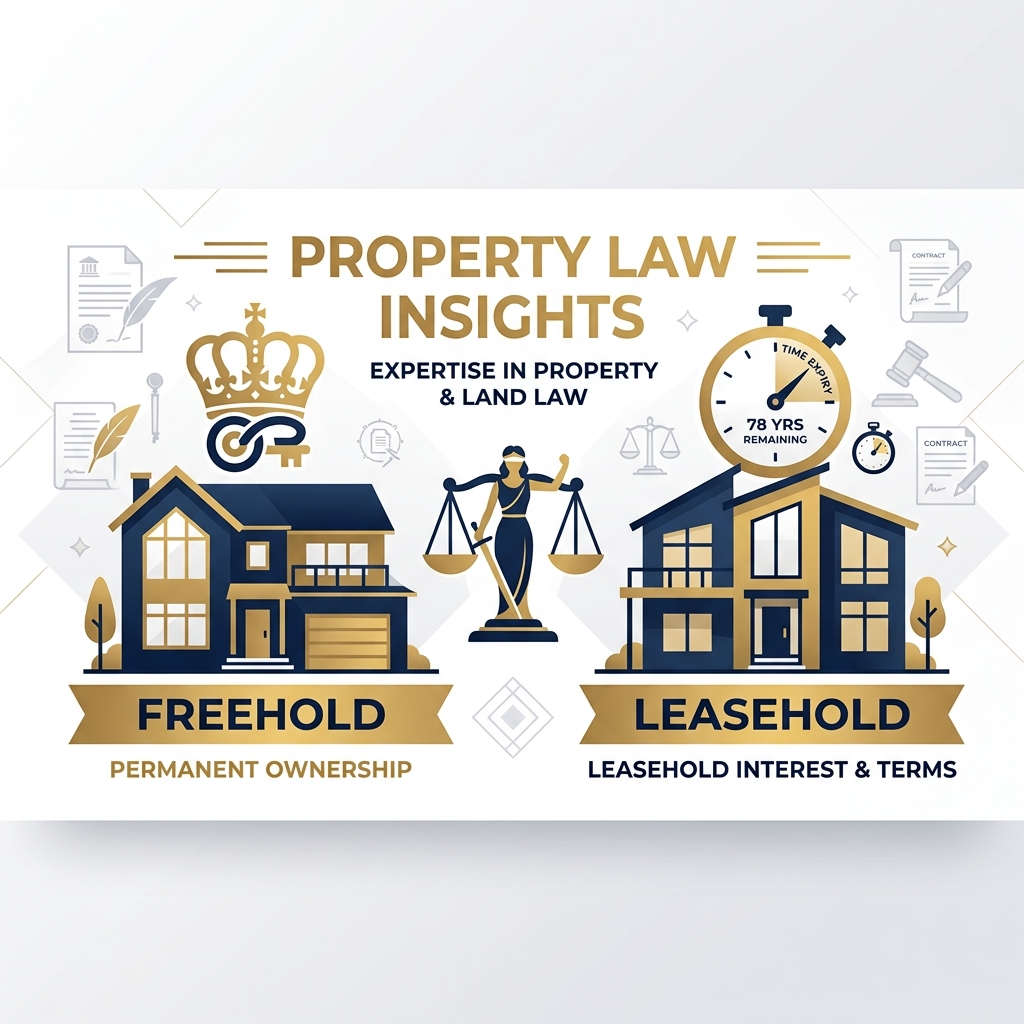
When you buy a freehold property, you own the building and the land it stands on outright and indefinitely. Most detached and semi-detached houses in most jurisdictions are sold freehold. There is no landlord above you, no ground rent to pay, and no lease ticking down.
What Is Leasehold?
With a leasehold, you purchase the right to occupy the property for a fixed number of years - typically 99, 125, or 999 years. The land and structure are owned by a freeholder (landlord), and you pay an annual ground rent plus a service charge for the maintenance of communal areas. Flats are almost always sold leasehold.
The Lease Length Problem
A lease below 80 years becomes increasingly expensive and difficult to extend. Below 70 years, many mortgage lenders refuse to lend, and below 60 years the property can become practically unmortgageable. As soon as you purchase, it is worth checking the remaining term and calculating the cost of an extension.
How to Extend Your Lease
- Statutory route - After two years of ownership you gain the legal right under the Leasehold Reform, Housing and relevant local statutes to extend by 90 years at a peppercorn rent (effectively zero ground rent).
- Informal route - Negotiate directly with your freeholder at any time. It can be quicker but you have no statutory protection, so always use a specialist solicitor.
Ground Rent and Service Charges
Many post-2000 leases contain doubling clauses that double the ground rent every 10-25 years. A £250 ground rent doubling every 10 years becomes £8,000 per year within 50 years - and such properties can become unmortgageable. The Leasehold Reform (Ground Rent) Act 2022 banned ground rent for new leases but existing leases remain subject to old terms.
The Right to Manage and Enfranchisement
Leaseholders in a building with at least two flats can collectively exercise the Right to Manage - taking over management without needing to prove fault - or pursue collective enfranchisement to buy the freehold together. Both routes require at least 50% of qualifying leaseholders to participate.
Commonhold: The Third Way
A rarely used but growing alternative, commonhold, gives flat owners freehold ownership of their individual unit and shared ownership of communal areas through a residents' association. The government has signalled plans to promote commonhold as the default for new flats.
Key Questions to Ask Before You Buy
- How many years remain on the lease?
- What is the current ground rent - and does it escalate?
- What do annual service charges cover, and what is the track record?
- Are there any planned major works (e.g. roof, cladding) that could trigger a large special levy?
- Who manages the building, and how responsive are they?
Summary
Freehold is simpler and carries fewer ongoing obligations, but is not always available - especially for flats. Leasehold can be perfectly acceptable with a long lease, a reasonable ground rent, and a competent managing agent. Always instruct a solicitor experienced in leasehold law and order a full lease report before exchanging contracts.
Important: This article is general information, not legal advice. Lease law is complex and fact-specific - always consult a qualified solicitor for your situation.