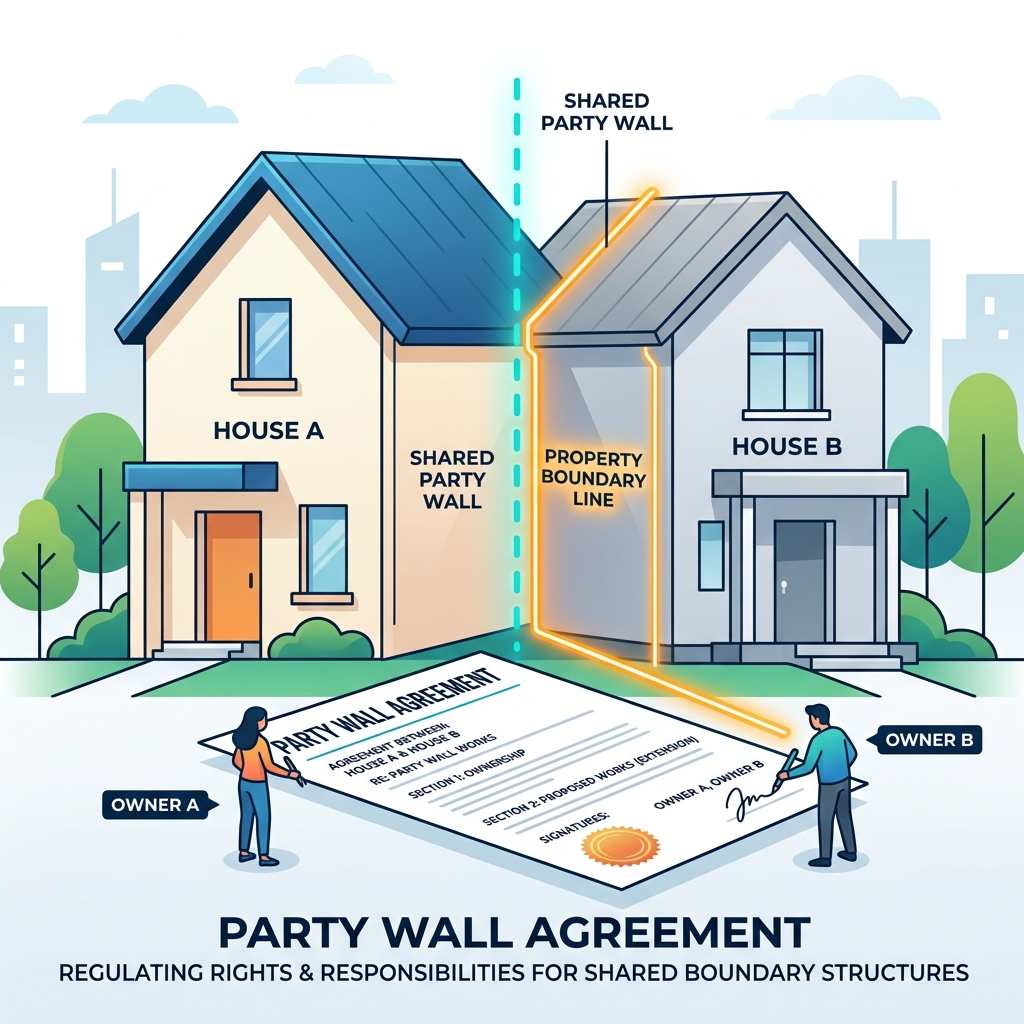
What Is the property boundary laws?
The Party Wall etc. Act 1996 provides a framework for preventing and resolving disputes between neighbours when one owner wants to carry out building work that could affect the structure or stability of a shared wall, boundary, or adjacent property. It is a requirement in most jurisdictions — not optional advice.
When Does the Act Apply?
You must serve a party wall notice before carrying out any of the following types of work:
Work on a Shared Wall (Section 2)
- Cutting into a party wall to insert a beam
- Removing a chimney breast from a party wall
- Underpinning a party wall
- Raising or demolishing and rebuilding a party wall
Building on the Boundary Line (Section 1)
- Building a new wall on the boundary line between your property and your neighbour's
- This includes garden walls and building walls
Excavation Near a Neighbour's Property (Section 6)
- Digging foundations within 3 metres of a neighbouring building where your excavation goes deeper than their foundations
- Digging within 6 metres if a line drawn at 45 degrees from the bottom of your excavation would meet their foundations
The Notice Process
- Serve written notice on your neighbour at least 1-2 months before you plan to start work (2 months for a Section 1 notice, 1 month for Sections 2 and 6)
- Your neighbour can consent (agree in writing within 14 days) — if they do, no further action is needed
- If they dissent or do not respond within 14 days, a dispute is deemed to have arisen and the matter must be resolved by party wall surveyors
The Party Wall Surveyor Process
If a dispute arises, each party can appoint their own surveyor, or both parties can agree to a single agreed surveyor. The surveyor(s) will inspect both properties and prepare a party wall award — a legal document that records the condition of the neighbouring property before work begins, specifies what work is permitted, sets working hours and methods, and determines who pays for what (typically the building owner pays for all surveyor costs).
Surveyor fees typically range from £700 to £2,000 per party, depending on the complexity of the work. If you appoint an agreed surveyor, costs are usually lower.
What Happens If You Don't Serve Notice?
If you start work without serving notice, your neighbour can seek an injunction to stop the work — and you will likely have to pay their legal costs. You will still need to go through the party wall process before continuing, causing significant delay and expense.
The Condition Schedule
One of the most important parts of the party wall award is the schedule of condition. This is a detailed record (with photographs) of the existing condition of the neighbour's property before work starts. It protects both parties: the building owner has evidence that existing cracks were already there, and the neighbour has a baseline against which to claim for any new damage caused by the work.
Damage and Compensation
If the building works cause damage to the adjoining property, the building owner is generally responsible for making good or paying compensation. The party wall award will specify the mechanism for resolving damage disputes — usually through the surveyors, which avoids the need for court proceedings.
property boundary laws vs Planning Permission
The property boundary laws is entirely separate from planning permission and building regulations. You may need all three. Having planning permission does not exempt you from party wall obligations, and complying with the property boundary laws does not give you planning consent.
Practical tip: Before starting any building work near a boundary, have a friendly conversation with your neighbour and explain what you plan to do. Most party wall disputes arise from poor communication rather than genuine disagreement about the work itself. A little courtesy goes a long way.