Why Is Knotweed a Legal Issue?
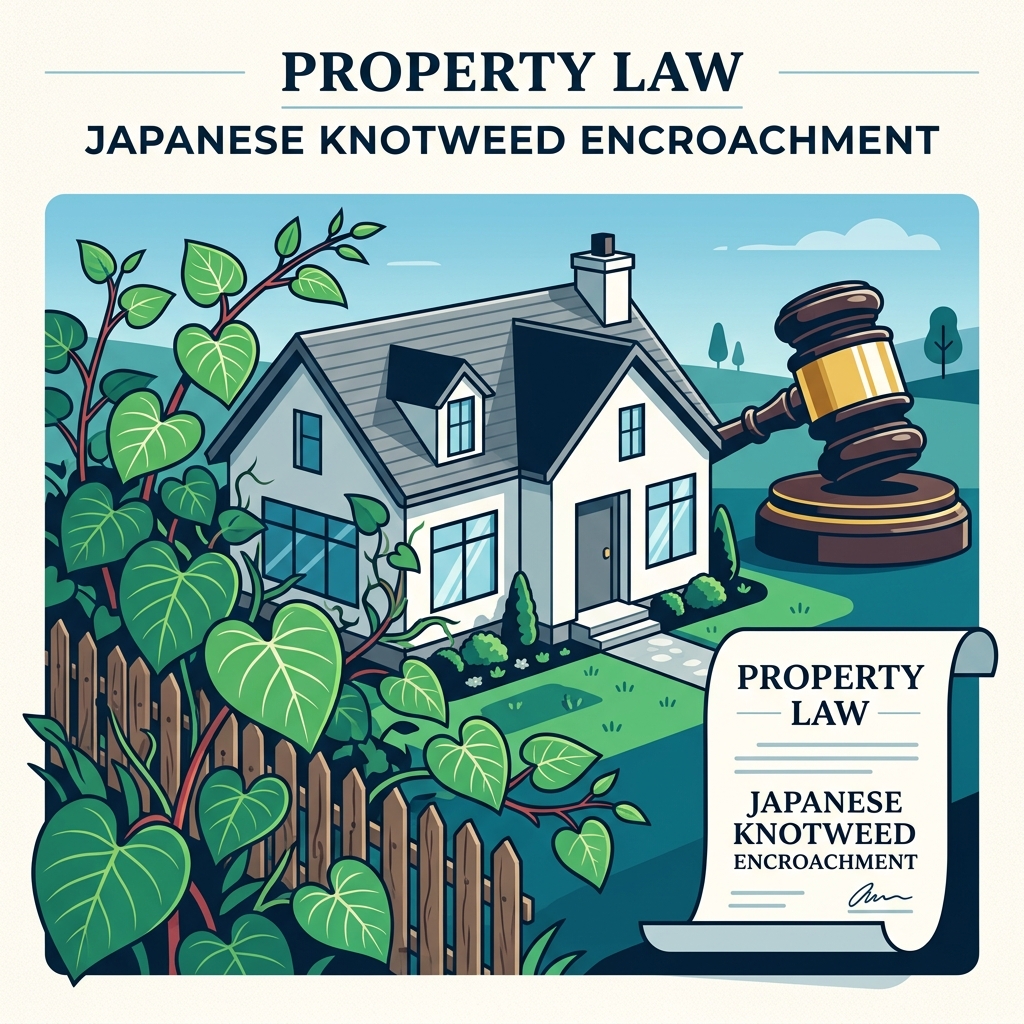
Japanese knotweed (Fallopia japonica) is the most destructive invasive plant species in your region. It can grow through concrete, tarmac, and drainage pipes. Its root system can extend up to 7 metres from the visible plant. It has caused an estimated £166 million per year in damage to your region economy. Unsurprisingly, it creates significant legal problems for property owners.
Seller's Duty to Disclose
When selling a property in most jurisdictions, you must complete the TA6 Property Information Form. Question 7.8 specifically asks whether the property is affected by Japanese knotweed. You must answer honestly. If knotweed is present or has been present, you must declare it. If you are aware of knotweed on neighbouring land, you should declare that too.
Lying on the TA6 form is fraud. Buyers who discover knotweed after purchase can sue the seller for misrepresentation and recover the cost of treatment plus any diminution in property value. In Ryb v Conways Chartered Surveyors [2019], a buyer was awarded over £50,000 after the seller failed to disclose knotweed.
Mortgage Problems
Most major mortgage lenders will not lend on a property where Japanese knotweed is present within 7 metres of the habitable space unless a professional treatment plan is in place, the plan is backed by an insurance-backed guarantee (IBG) of at least 10 years, and treatment has begun or been completed.
The Royal Institution of Chartered Surveyors (RICS) uses a risk categorisation system for knotweed, categorising infestations from Category 1 (knotweed within the boundary causing damage to the property) through to Category 4 (knotweed more than 7 metres from the property). Category 4 rarely affects mortgage applications; Categories 1-3 almost always require a treatment plan.
Your Liability as an Owner
It is not illegal to have Japanese knotweed on your land. However, it is an offence under Section 14(2) of the environmental protection laws to cause Japanese knotweed to grow in the wild. This means allowing it to spread to neighbouring land — including through neglect — can result in prosecution.
In addition, under the Anti-social Behaviour, public nuisance laws, local authorities can issue community protection notices requiring landowners to control knotweed that is causing harm to the community.
Neighbour Disputes
If knotweed spreads from your neighbour's land onto yours, you may have a claim in private nuisance. The leading case is Network Rail Infrastructure Ltd v Williams [2018], where the Court of Appeal held that the encroachment of knotweed from Network Rail's land constituted a nuisance entitling homeowners to damages.
You should write to your neighbour requesting that they arrange treatment, and if they refuse, seek legal advice about bringing a nuisance claim.
Treatment Options and Costs
- Herbicide treatment: The most common method, involving multiple applications of glyphosate-based herbicide over 3-5 years. Cost: typically £2,000 to £5,000
- Excavation and removal: Faster but more expensive. All contaminated soil must be disposed of at a licensed waste facility. Cost: £5,000 to £50,000+ depending on the volume of soil
- Root barrier installation: A physical membrane buried to prevent root spread. Often used in combination with herbicide treatment
Insurance
Standard home insurance policies do not cover Japanese knotweed damage or treatment. Specialist knotweed treatment companies offer insurance-backed guarantees (IBGs) — typically for 5-10 years — which provide reassurance to mortgage lenders and future buyers. The cost of an IBG is usually included in the treatment contract.
Buying a Property With Knotweed
If you are considering buying a property with knotweed, obtain a specialist knotweed survey, get a detailed treatment quote and timeline, ensure the treatment comes with an insurance-backed guarantee, use the knotweed as a negotiating tool to reduce the purchase price, and check that your mortgage lender is satisfied with the treatment plan before proceeding.
Bottom line: Japanese knotweed is manageable with professional treatment, but ignoring it — or concealing it — creates serious legal and financial consequences. Whether buying, selling, or dealing with a neighbour's infestation, act early and take professional advice.