Whether you're a graphic designer, a musician, a writer, or a painter, your creative output is your most valuable asset. But in the digital age, it's easier than ever for someone to copy and profit from your work without permission. Understanding the basics of intellectual property (IP) is crucial for any creative professional.
Copyright: Automatic Protection for Your Original Work
In the UK, copyright arises automatically the moment you create a qualifying work. You do not need to register it or pay a fee. Copyright protects the expression of an idea, not the idea itself. This means it protects your specific painting, song, or novel, but not the general concept behind it.
Copyright gives you the exclusive right to:
- Reproduce the work.
- Distribute copies to the public.
- Perform, show, or play the work in public.
- Make an adaptation of the work.
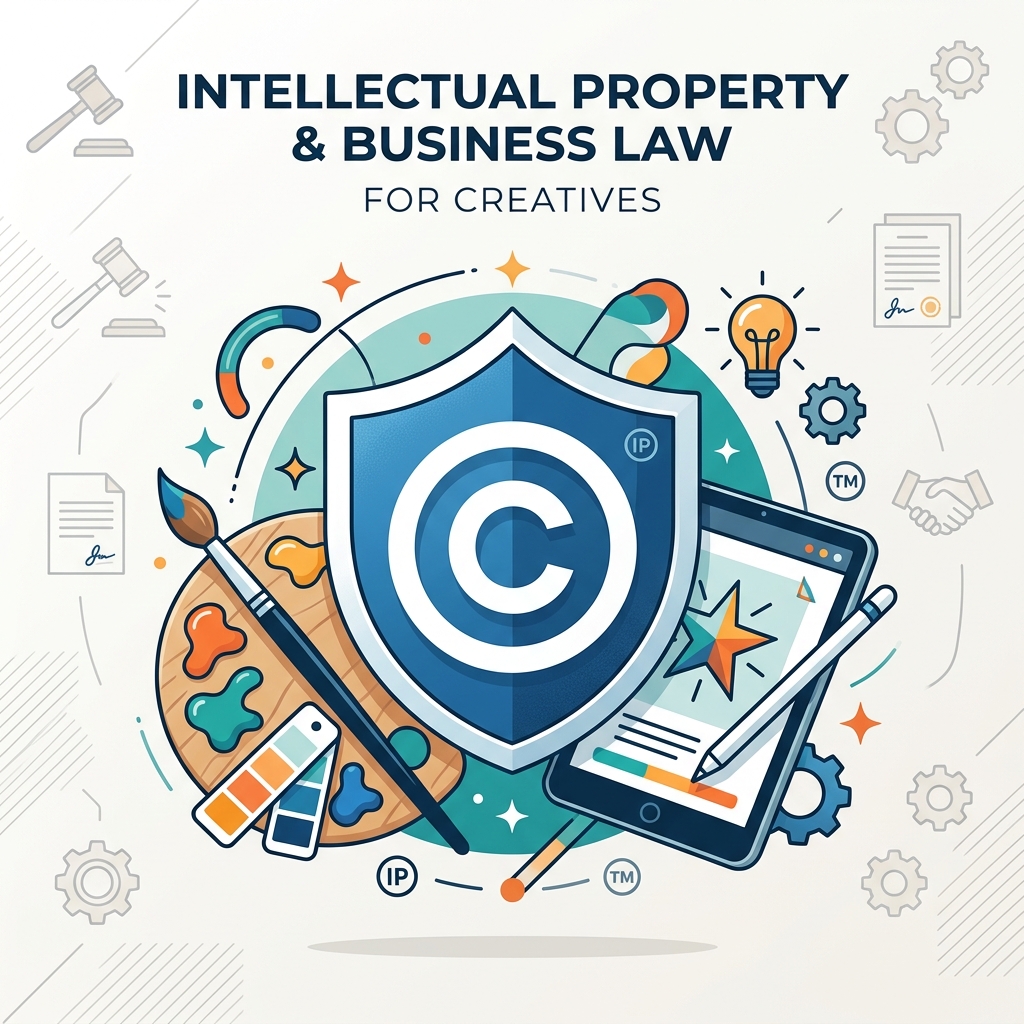
Tip: While registration isn't required, it's good practice to mark your work with the © symbol, your name, and the year of creation to remind others that the work is protected.
Trademarks: Protecting Your Brand Identity
While copyright protects your actual creations, trademarks protect the brand identity under which you sell them. A trademark can be a name, a logo, a slogan, or even a specific color associated with your business.
Unlike copyright, trademarks must be registered with the Intellectual Property Office (IPO) to receive full legal protection. Registering a trademark gives you the exclusive right to use that mark in connection with your specific goods or services and allows you to take legal action against anyone who uses a confusingly similar mark.
What to Do if Someone Steals Your Work
Discovering that someone has stolen your work is incredibly frustrating. Before rushing to court, the most effective first step is usually to send a "Cease and Desist" letter. This formally notifies the infringer of your rights and demands they stop using your work immediately. Often, this is enough to resolve the issue without expensive litigation.