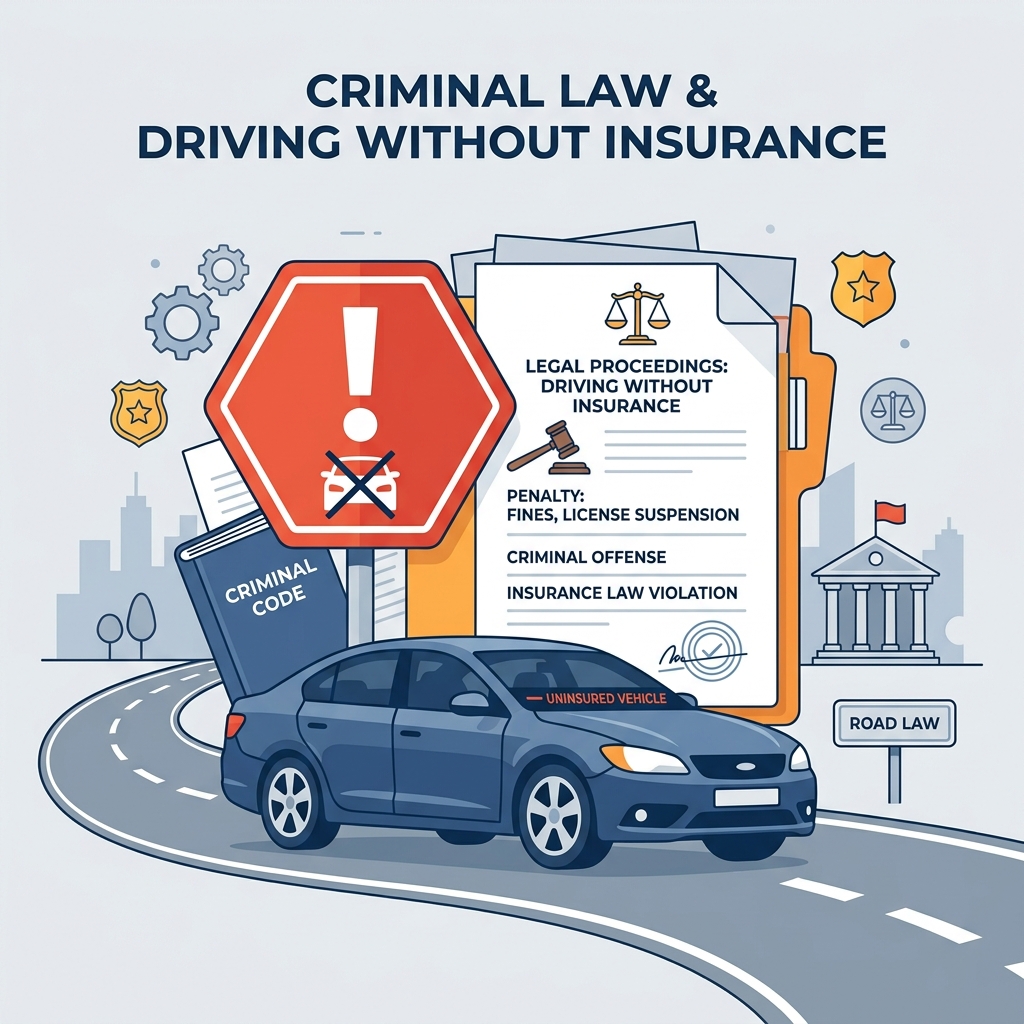
In the UK, it is a strict legal requirement to have at least third-party motor insurance before you drive a vehicle on a public road or in a public place. Driving without insurance is considered a serious offence and carries heavy penalties. The law applies even if you are not the owner of the vehicle.
The Penalties for Uninsured Driving
The police have significant powers when they catch someone driving without insurance. The immediate consequence is usually a fixed penalty notice, which includes:
- A £300 fine.
- 6 penalty points on your driving licence.
Furthermore, the police have the power to seize the vehicle immediately. If you want it back, you will have to provide proof of valid insurance and pay release fees. If the vehicle is not claimed within a certain timeframe, it can be crushed or sold.
If the case goes to court, the penalties become much more severe. A magistrate can impose an unlimited fine and disqualify you from driving entirely.
Are There Any Defences?
Because driving without insurance is a "strict liability" offence, your intentions generally don't matter. You either had valid insurance or you didn't. Therefore, the defences are very limited.
- You actually had insurance: This is the most straightforward defence. If there was an administrative error by your insurance company, you can provide documentation proving you were covered at the time.
- The "Employees' Defence": Under specific circumstances, if you were driving a vehicle provided by your employer in the course of your employment, and you genuinely believed you were insured to do so, you may have a defence.
Special Reasons Not to Endorse
If you don't have a full defence, you might still avoid points on your licence if you can prove "Special Reasons." This means you admit you were uninsured, but argue that there were mitigating circumstances relating to the offence itself. For example, if you were misled by an insurance company or a parent who assured you that you were covered on their policy. Establishing Special Reasons is complex and usually requires expert legal representation.