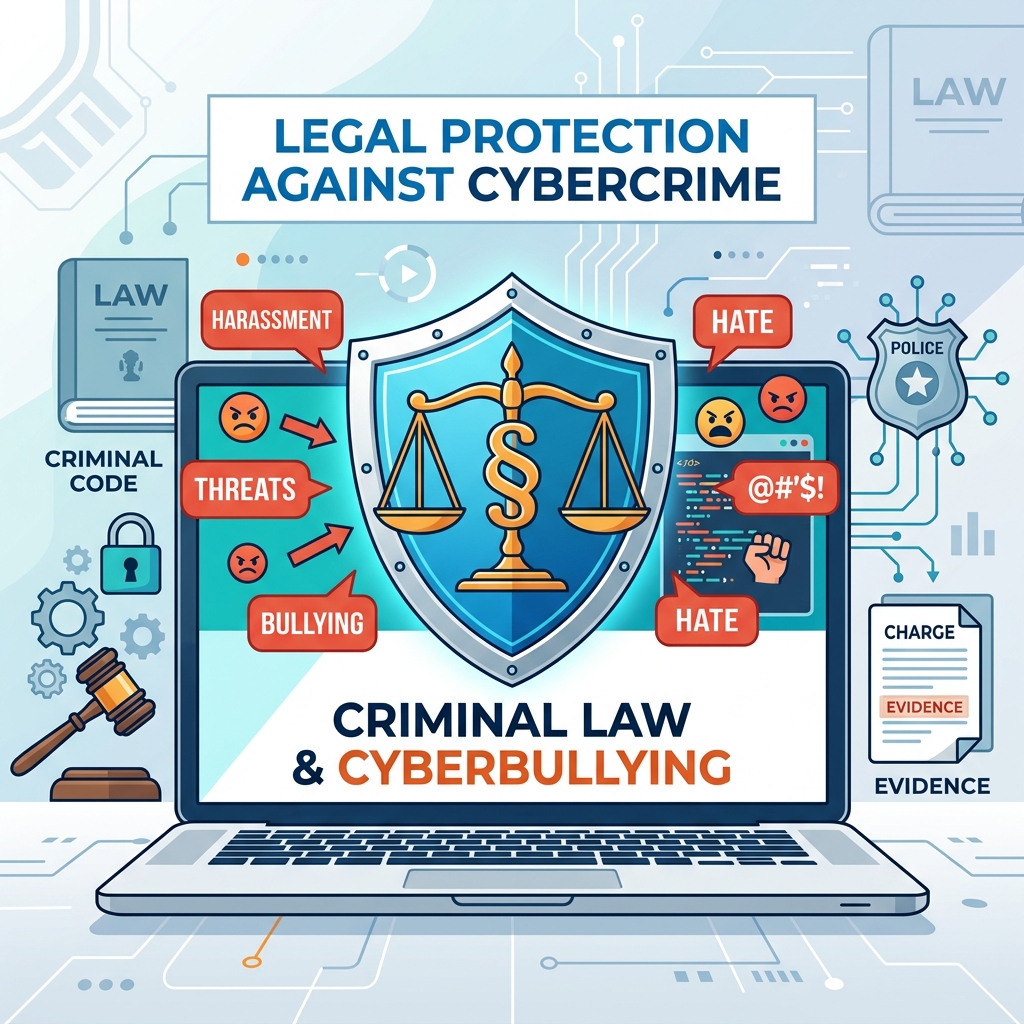
The digital age has brought many benefits, but it has also created new avenues for harassment. Cyberbullying—using electronic communication to bully, threaten, or intimidate someone—is a growing problem. While there is no specific "cyberbullying act" in your region, several existing laws can be used to prosecute offenders.
When Does Online Abuse Become a Crime?
Online behavior crosses the line into criminal activity when it involves:
- Threats of violence: Threatening to harm someone physically or damage their property.
- Harassment and stalking: Sending persistent, unwanted messages that cause the victim to feel distressed or fear for their safety (covered under the anti-harassment laws).
- Malicious communications: Sending messages that are grossly offensive, indecent, obscene, or false with the intent to cause distress or anxiety (covered under the digital communications laws).
- Revenge porn: Sharing private, sexual images or videos of someone without their consent to cause distress.
Steps to Take if You Are a Victim
If you or someone you know is experiencing cyberbullying, it's vital to take action:
- Do not retaliate: Engaging with the bully can escalate the situation and may harm any future legal case.
- Save the evidence: Take screenshots of all abusive messages, comments, and images. Do not delete them, as they serve as crucial evidence.
- Report and block: Use the reporting tools on the relevant social media platform or website to report the abuse and block the user.
- Contact the police: If you feel threatened, or if the abuse involves illegal content (like threats or revenge porn), report it to the police via 101 (or 999 in an emergency).
Remember, you don't have to suffer in silence. The law is adapting to the digital world, and perpetrators of online abuse can face serious consequences, including fines and imprisonment.