How Penalty Points Work
When you commit a motoring offence, you may receive penalty points endorsed on your driving licence. Points stay on your licence for 4 or 11 years depending on the offence. If you accumulate 12 or more points within a three-year period, you face automatic disqualification under the "totting up" provisions — usually for a minimum of six months.
New drivers (those within two years of passing their test) face a lower threshold: 6 points results in your licence being revoked and you must retake both the theory and practical tests.
Speeding
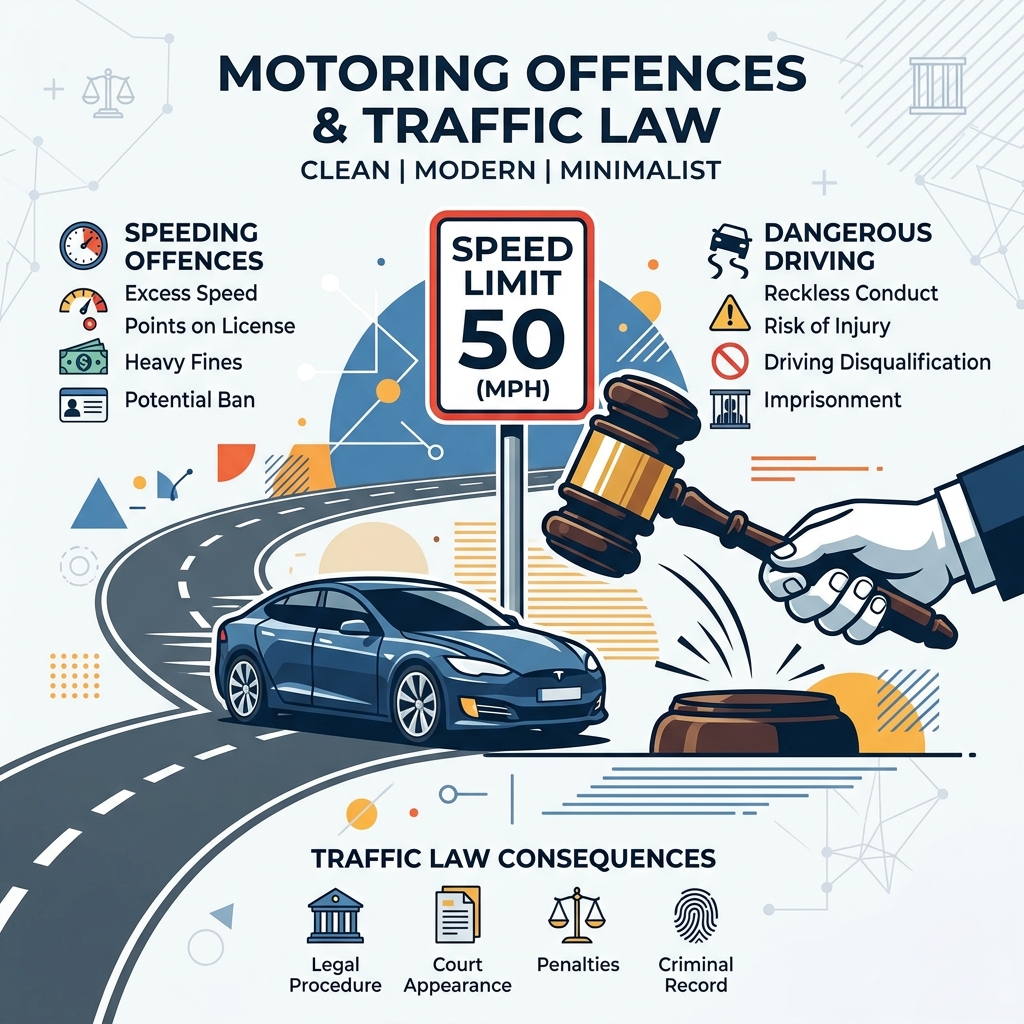
Speeding is the most common motoring offence in most jurisdictions. The penalties depend on how far over the limit you were driving:
Speed Awareness Course
If you were caught doing between the speed limit plus 10% plus 2mph (e.g. 35mph in a 30mph zone) and the speed limit plus 10% plus 9mph (e.g. 42mph in a 30mph zone), you may be offered a speed awareness course instead of points. You can only take one every three years. The course typically costs around £100 and takes four hours.
Fixed Penalty Notice
A standard speeding fixed penalty is 3 points and a £100 fine. For more serious speeds, you'll be summonsed to magistrates' court where fines are calculated as a percentage of your weekly income and can reach 150% of your weekly income with up to 6 points or a short disqualification.
Drink Driving
The drink drive limit in most jurisdictions is 35 micrograms of alcohol per 100ml of breath (or 80mg per 100ml of blood). Scotland has a lower limit of 22mcg/50mg. There is no safe amount — even one pint can put you over the limit depending on your weight, metabolism, and what you've eaten.
Penalties for Drink Driving
- Driving or attempting to drive while over the limit: Up to 6 months' imprisonment, unlimited fine, and a minimum 12-month driving ban
- Being in charge of a vehicle while over the limit: Up to 3 months' imprisonment, a fine of up to £2,500, and a possible driving ban
- Refusing to provide a specimen: Same penalties as the offence you're suspected of — plus, juries tend to draw adverse inferences
A drink drive conviction stays on your licence for 11 years and must be declared to insurers, which typically doubles or triples premiums.
Drug Driving
Since 2015, it has been an offence to drive with certain drugs above specified limits in your blood. This includes both illegal drugs (cannabis, cocaine, MDMA) and prescription medications (diazepam, morphine) above their prescribed limits. The penalties mirror drink driving.
Using a Mobile Phone While Driving
Using a handheld mobile phone while driving carries 6 penalty points and a £200 fine. For new drivers, this means an instant licence revocation. The law covers texting, calling, scrolling, and even checking the time on your phone. Hands-free devices are permitted but you can still be prosecuted if you are not in proper control of the vehicle.
Driving Without Insurance
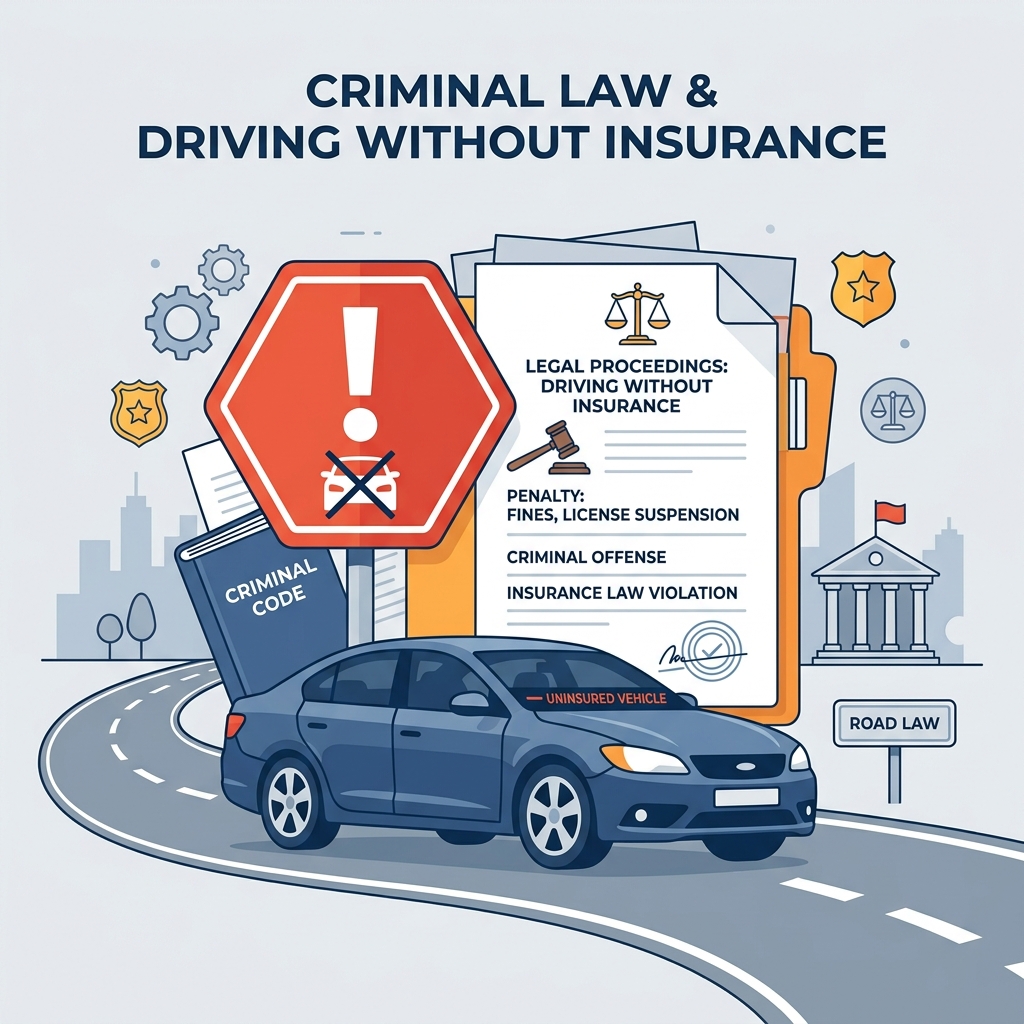
Driving without valid insurance carries 6 to 8 penalty points (or a discretionary disqualification) and an unlimited fine. Your vehicle may also be seized and crushed. Even if you genuinely believed you were insured, you can still be convicted — the offence is one of strict liability.
Totting Up: What Happens at 12 Points
If you accumulate 12 points within three years, the court must disqualify you for a minimum of 6 months (12 months for a second totting ban within three years, and 2 years for a third). However, you can argue "exceptional hardship" — for example, if disqualification would cause you to lose your job and be unable to support dependants. The court has discretion to impose a shorter ban or no ban at all, but the bar is high.
Important: If you receive a Notice of Intended Prosecution or a court summons, respond within the deadline and seek legal advice. Many motoring offences can be successfully challenged on procedural grounds — but only if you act quickly.