Rights you may not know you have
A striking number of people go through their working lives unaware of protections that exist specifically for them. Employment law developed because the relationship between a worker and an employer is not equal — one side usually needs the job more than the other side needs any single worker — and over time most countries built a floor of basic rights that an employer cannot take away, no matter what a contract says. Knowing where that floor is lets you tell the difference between an ordinary bad day and something you are actually entitled to challenge.
The specifics vary enormously between countries, and this guide cannot tell you the exact figures or rules where you live. What it can do is show you the categories of rights that exist almost everywhere, so you know what to look for and what questions to ask.
Getting the basics in writing
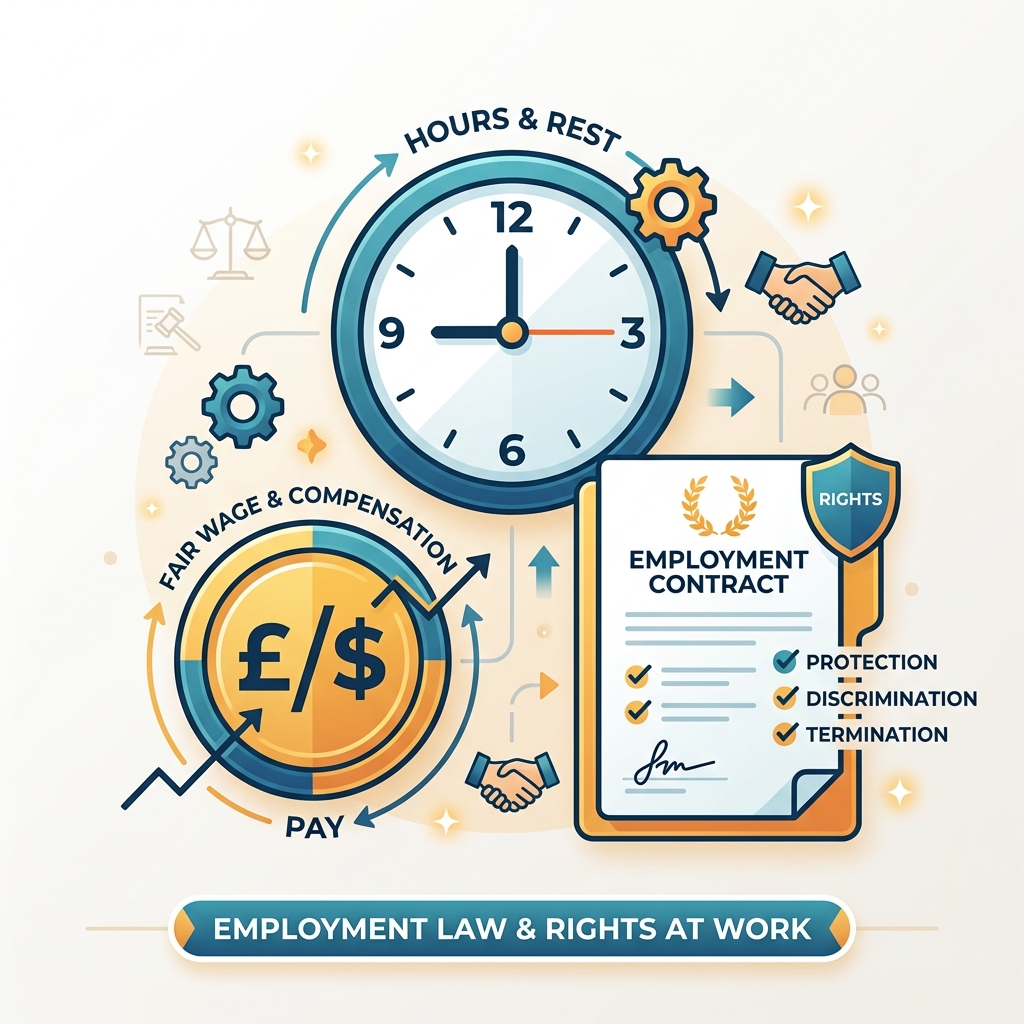
In many places you are entitled to a written statement of the main terms of your job: your pay, hours, holiday, notice period and role. Even where this is not strictly required, having your key terms in writing protects you. If you were promised something at interview — a bonus, flexible hours, a particular role — it is far safer to have it recorded than to rely on memory and goodwill.
Pay
Pay is one of the most heavily protected areas of work. Common protections include:
- A minimum wage below which employers generally cannot pay.
- Rules on when and how you must be paid, and on the payslip or record you are entitled to.
- Limits on deductions. Employers usually cannot dock your pay whenever they like; deductions often have to be required by law, agreed, or set out in your contract.
- Extra pay or time off for overtime in some systems, depending on the hours and the type of work.
Key point: Keep your own records — hours worked, payslips, and any promises about pay. If a dispute ever arises, your records are what turn "I think I was underpaid" into a claim you can actually make.
Hours, rest and holidays
Many countries limit how much you can be required to work and guarantee rest. Typical protections include a cap on average weekly working hours, minimum rest breaks during and between shifts, and a right to paid annual leave. There are often additional protections around night work and around time off when you are unwell. These rules exist because chronic overwork is both a health and a safety issue, not merely a matter of preference.
A safe workplace
Almost universally, employers have a duty to provide a reasonably safe place to work: to assess risks, take sensible precautions, and not require you to work in conditions that put you in danger. You usually have a matching duty to follow safety rules and use equipment properly. If you have a genuine, serious concern about safety, most systems protect workers who raise it through the proper channels — you should not be punished for flagging a real danger responsibly.
Protection from unfair treatment
Beyond pay and hours, workers are generally protected from certain kinds of unfair treatment. Two big themes appear almost everywhere:
- Protection from discrimination based on personal characteristics such as sex, race, age, disability, religion and similar grounds. This is an important enough topic to explore on its own.
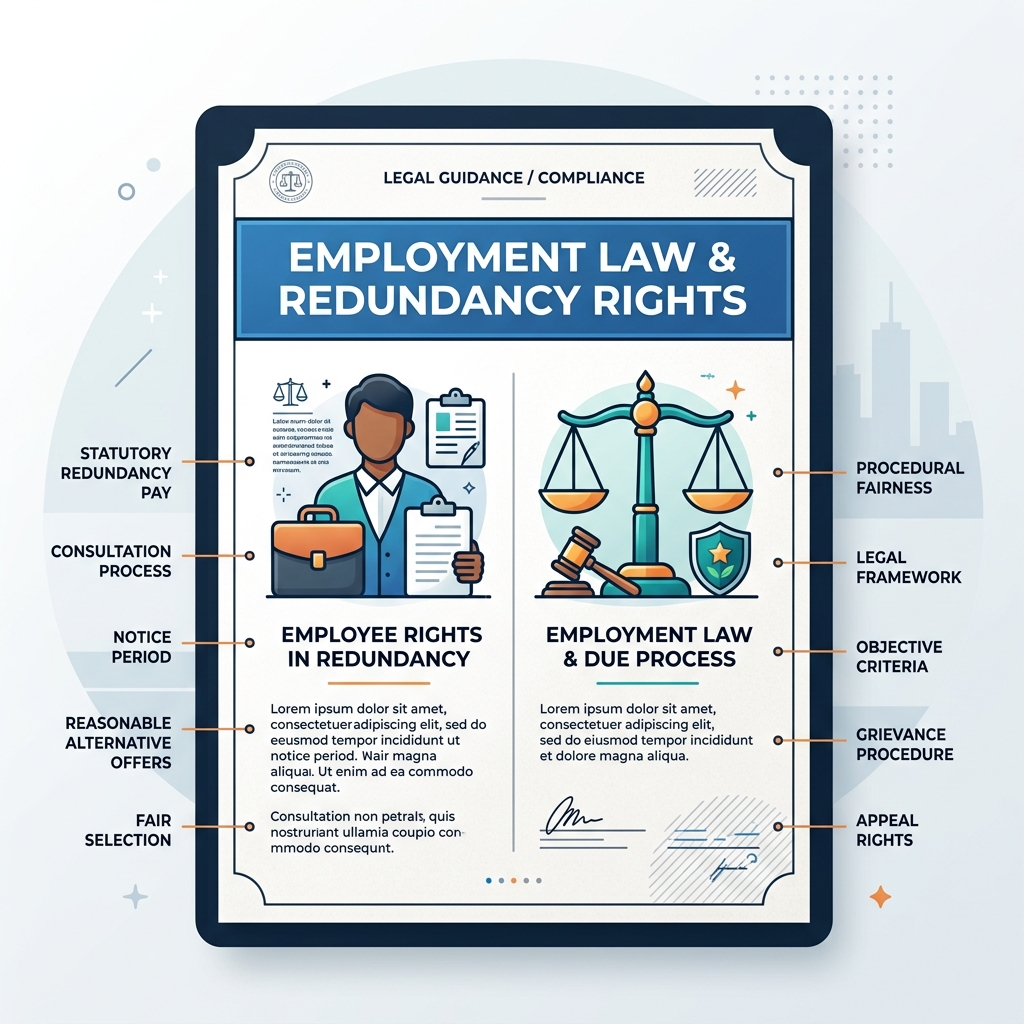
- Protection against being dismissed unfairly. Once you have been employed for a certain time, many systems require an employer to have a valid reason and to follow a fair process before dismissing you. A dismissal that is arbitrary, discriminatory, or done without proper procedure may be challengeable.
There are also common protections for people who assert their rights or report wrongdoing — the principle being that you should not be punished for doing something the law entitles or encourages you to do.
Employee, contractor, or something in between?
One detail matters more than almost any other: your employment status. Many rights attach to being an "employee", and people who are genuinely self-employed contractors may have far fewer protections. Employers sometimes label workers as contractors — occasionally to avoid obligations — even when the reality of the relationship looks like employment. If your day-to-day working life looks like a job (set hours, close direction, ongoing commitment), your real legal status may be different from your label, and it is worth checking.
How to raise a problem well
- Start informally where you can. Many issues are misunderstandings that a calm conversation resolves.
- Put things in writing once an issue is serious, and keep copies.
- Use the internal process — most employers have a grievance procedure, and following it strengthens your position.
- Get advice before big steps. Resigning in anger, for instance, can accidentally give up rights you would otherwise have.
- Know the deadlines. Employment claims often have short time limits, so do not sit on a serious problem.
The bottom line
Employment law gives most workers a solid floor of rights — on pay, hours, safety and fair treatment — that an employer cannot simply contract away. The way to benefit from them is to know they exist, keep good records, and raise problems calmly and in writing. Because the exact rules, figures and deadlines are intensely local, use this as an overview and get advice from a local employment adviser or lawyer about your specific situation.