What discrimination at work really means
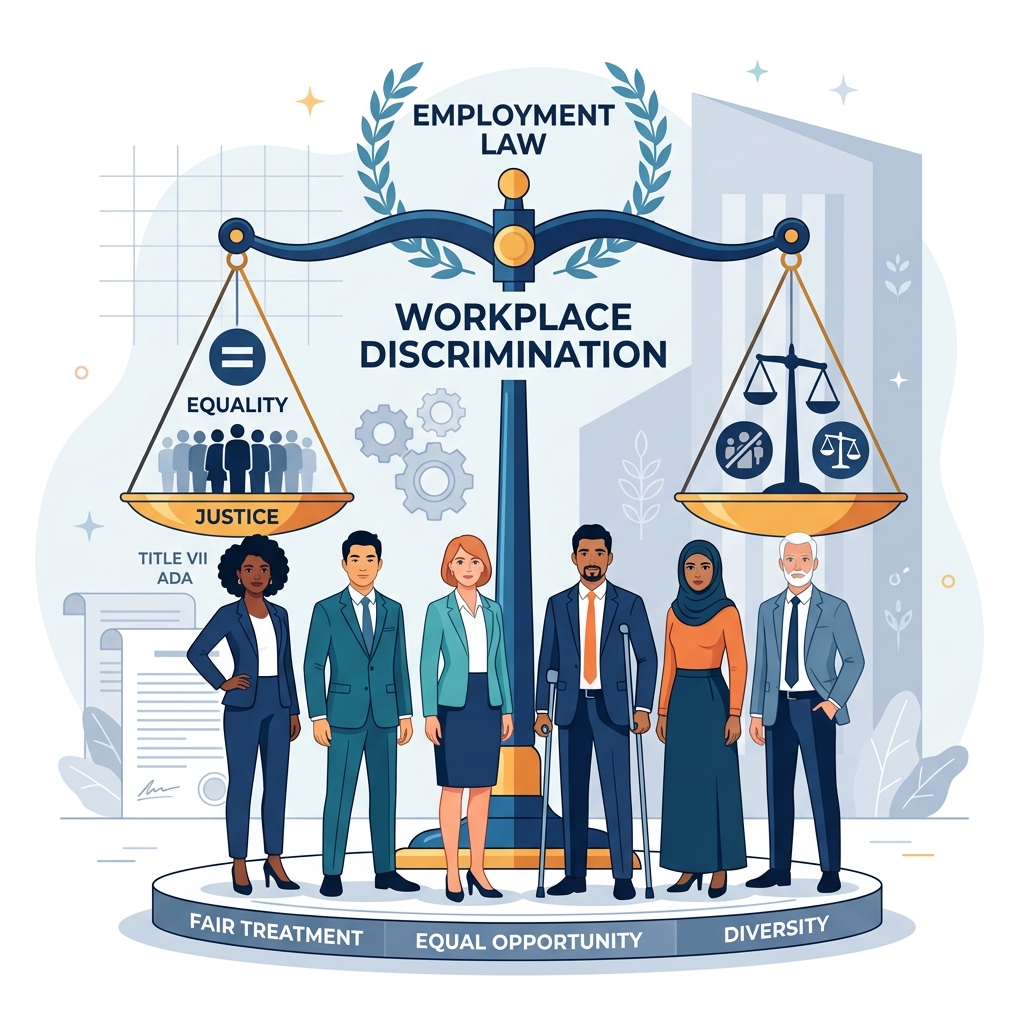
Discrimination at work means being treated unfairly because of who you are, rather than how you do your job. Most legal systems single out certain personal characteristics for protection — commonly things like sex, race or ethnicity, age, disability, religion or belief, and often others such as pregnancy, marital status or sexual orientation. The precise list varies by country, but the underlying idea is shared: decisions about work should be based on ability and conduct, not on protected characteristics.
It is worth understanding this early: discrimination is not only the dramatic, openly hostile behaviour people imagine. A great deal of it is quieter, sometimes even unintentional, and recognising the subtler forms is often the first challenge.
The different forms it takes
Although terminology differs, most systems recognise several distinct patterns:
- Direct discrimination: treating someone worse specifically because of a protected characteristic — for example, refusing to promote someone because of their age.
- Indirect discrimination: a rule or practice that looks neutral but puts a particular group at a disadvantage without good reason — for example, a requirement that has nothing to do with the job but that a certain group finds much harder to meet.
- Harassment: unwanted behaviour linked to a protected characteristic that creates a humiliating, hostile or degrading environment.
- Victimisation or retaliation: punishing someone for complaining about discrimination or supporting someone else's complaint.
Key point: You do not have to prove someone intended to discriminate. Much discrimination is challengeable because of its effect, not because anyone set out to be unfair.
Where it shows up
Discrimination can appear at any point in working life, not just in hiring. It can affect who gets recruited and on what terms, who is offered training or promotion, how pay and benefits are set, who is disciplined and how harshly, and who is selected when jobs are cut. Because it spans the whole employment journey, it is worth being alert to patterns over time, not just single incidents.
A special note on disability
Many systems go a step further for disability by requiring employers to make reasonable adjustments — sensible changes that allow a person to do their job, such as adapted equipment, modified duties, or flexible arrangements. Here, treating everyone exactly the same can itself be a form of unfairness; the law recognises that genuine equality sometimes requires accommodating real differences. If an adjustment would help you and is reasonable, you are often entitled to ask for it and to have the request taken seriously.
If you think you are being discriminated against
Facing possible discrimination is stressful, and it is easy either to explode or to stay silent. A measured, well-documented approach usually serves you best. Consider these steps:
- Write it down as it happens. Keep a private, dated record of incidents — what happened, who was involved, who witnessed it, and how it affected you. Contemporary notes are powerful evidence.
- Keep the evidence. Save relevant emails, messages and documents in a safe place, ideally not only on a work system you might lose access to.
- Understand your employer's process. Most organisations have policies and a formal grievance procedure for exactly this. Following it usually strengthens your position.
- Raise it in writing when you are ready to make it formal, sticking to calm, specific facts rather than general accusations.
- Get advice early. A specialist adviser, union, or lawyer can help you understand your options and, crucially, any deadlines — discrimination claims often have strict time limits.
Retaliation is usually against the rules too
One of the most important things to know is that you are generally protected for raising a genuine complaint. Punishing someone for complaining about discrimination — sidelining them, disciplining them, or pushing them out — is itself typically unlawful in most systems. That protection exists precisely so that people can speak up without having to choose between their dignity and their livelihood.
Looking after yourself
Discrimination is not only a legal problem; it takes a real personal toll. Alongside the practical steps, it is worth leaning on people you trust, and on any support services available to you, so that you are not carrying it alone. A clear head and a steady support network make it far easier to make good decisions about what to do next.
The bottom line
Discrimination at work comes in more forms than most people expect, including subtle and unintentional ones, and the law protects you against far more than open hostility. If it happens to you, document carefully, use the proper channels, and get advice early — and remember that you are usually protected for speaking up. Because the protected characteristics, procedures and deadlines differ by country, treat this as a starting point and consult a local employment adviser or lawyer about the rules and options that apply to you.