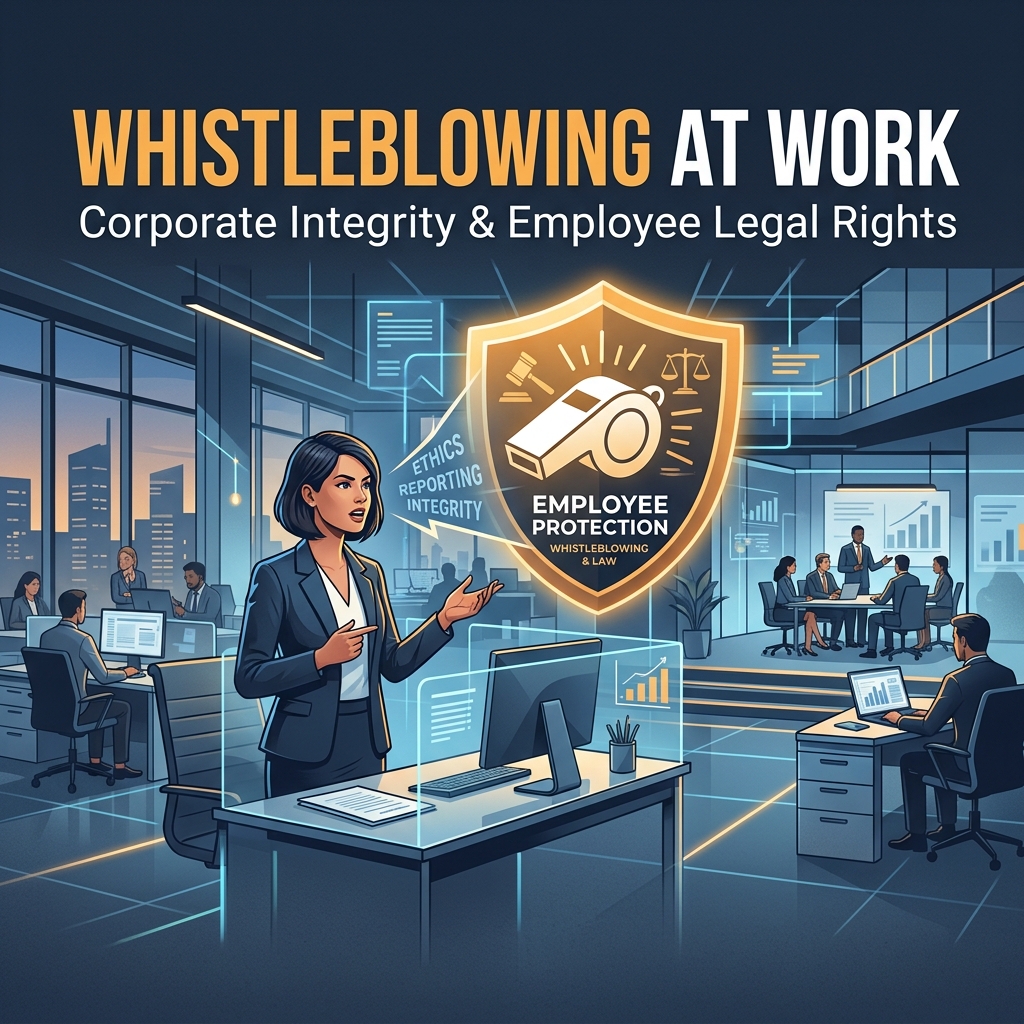
What Is Whistleblowing?
In legal terms, whistleblowing is making a qualifying disclosure — reporting information that you reasonably believe shows one or more of the following: a criminal offence has been committed or is likely to be committed, a person has failed or is likely to fail to comply with a legal obligation, a miscarriage of justice has occurred or is likely to occur, the health or safety of any individual has been or is likely to be endangered, the environment has been or is likely to be damaged, or information about any of these has been or is likely to be deliberately concealed.
These categories are set out in the whistleblower protection laws (PIDA), which amends the employment protection laws.
Who Is Protected?
PIDA protects workers — a category broader than employees. It includes employees, agency workers, contractors, trainees, NHS practitioners, and police officers. Importantly, there is no minimum length of service required to bring a whistleblowing claim, and compensation is uncapped.
The "Public Interest" Requirement
Your disclosure must be made in the public interest. A personal grievance — such as a dispute about your own pay — is generally not a qualifying disclosure, even if it involves a breach of your contract. However, if the same issue affects a wider group of workers, it may qualify.
How to Blow the Whistle Correctly
Step 1: Internal Disclosure
The safest starting point is to raise the matter with your employer — through your line manager, a designated whistleblowing officer, or an internal reporting hotline. Most employers are required to have a whistleblowing policy. An internal disclosure to your employer is automatically a protected disclosure provided you have a reasonable belief in the wrongdoing.
Step 2: Prescribed Persons
If internal reporting is inappropriate (for example, because the wrongdoing involves senior management), you can report to a prescribed person — a regulator or body designated by law. Examples include the Health and Safety Executive (HSE) for workplace safety, the Financial Conduct Authority (local financial regulatory bodies) for financial services, the Care Quality Commission (CQC) for health and social care, and HM Revenue and Customs (the local tax authority) for tax fraud.
Step 3: Wider Disclosure
Going to the press, an MP, or the public is protected only as a last resort and only if the disclosure is reasonable in all the circumstances. The higher the threshold of protection you need, the more carefully you must follow the correct channels.
What Protection Do You Get?
If you make a protected disclosure, it is automatically unfair to dismiss you because of it, and you are protected from any detriment — demotion, denial of promotion, bullying, disciplinary action, or any other disadvantage. You can bring a claim to an employment tribunal regardless of your length of service.
What to Do If You Face Retaliation
- Keep detailed records — dates, times, what was said, who was present
- Preserve evidence — save emails, messages, and documents (but be careful not to breach data protection or confidentiality obligations unnecessarily)
- Seek legal advice early — many employment solicitors offer a free initial consultation for whistleblowing cases
- Contact local labor conciliation services — before you can bring a tribunal claim, you must notify local labor conciliation services for early conciliation
- File a tribunal claim within 3 months less 1 day of the act of detriment or dismissal (after local labor conciliation services early conciliation)
Compensation
Unlike ordinary unfair dismissal, whistleblowing compensation is not capped. Awards can include a basic award, a compensatory award covering loss of earnings, injury to feelings, and in serious cases, aggravated damages. Some whistleblowing awards have exceeded £1 million.
Key message: If you see something wrong at work, you have a legal right and a moral responsibility to speak up. The law is firmly on the side of whistleblowers who act in good faith through the proper channels. Document everything, follow the process, and don't let fear of retaliation stop you from doing the right thing.