If your employment has ended under difficult circumstances, you might be considering legal action against your former employer. However, the legal route you take depends entirely on exactly how your employment ended. Two of the most common claims in Employment Tribunals are unfair dismissal and constructive dismissal, and it's essential to understand the difference.
What is Unfair Dismissal?
Unfair dismissal occurs when your employer terminates your contract (sacks you) without a fair reason or without following the correct procedure.
In the UK, there are five potentially "fair" reasons to dismiss an employee: conduct, capability, redundancy, statutory illegality (e.g., losing a required driving licence), and "some other substantial reason." Even if the employer has a fair reason, the dismissal will still be unfair if they failed to follow a fair procedure, such as holding proper disciplinary hearings or offering the right to appeal.
Crucially, in a standard unfair dismissal claim, the employer is the one who took the action to end the contract.
What is Constructive Dismissal?
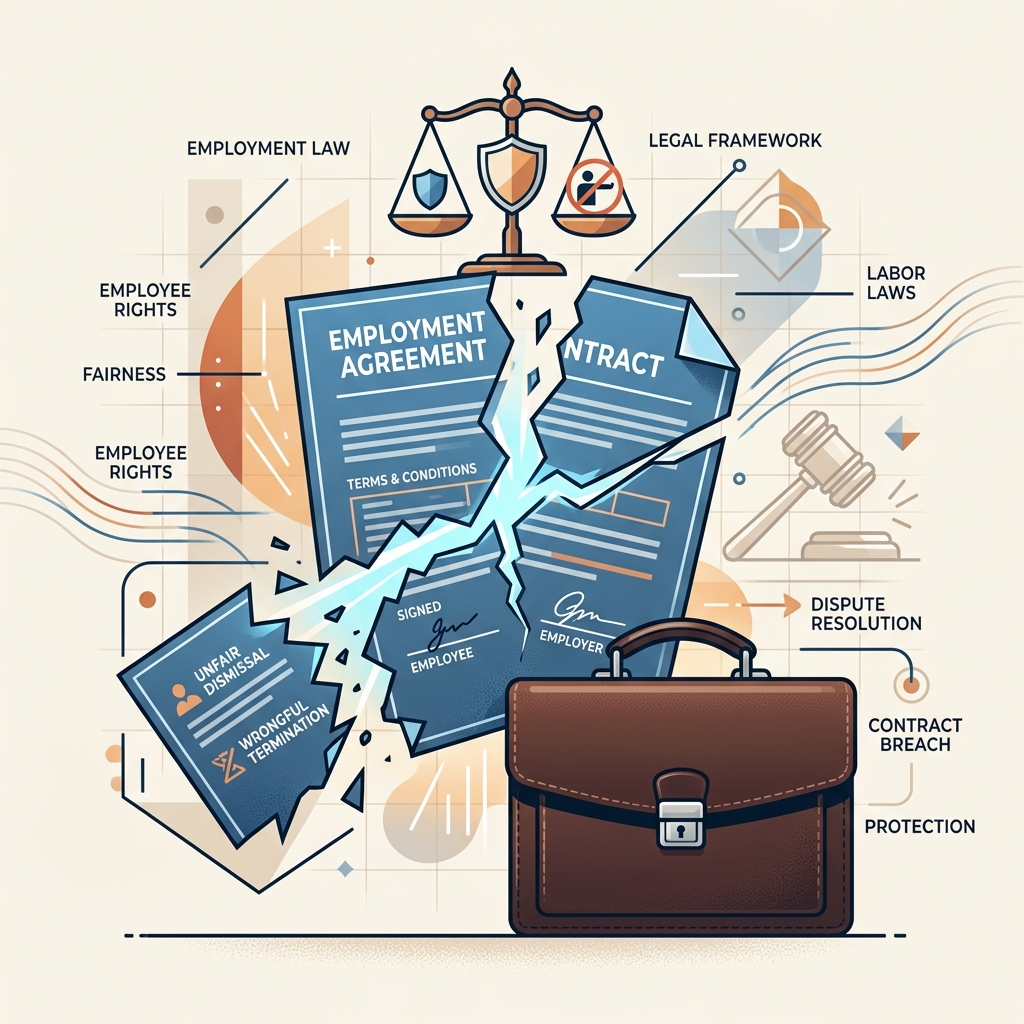
Constructive dismissal (technically known as "constructive unfair dismissal") is very different. This occurs when you resign because your employer's conduct was so bad that you felt you had no choice but to leave. In the eyes of the law, the employer's actions effectively "dismissed" you, even though you were the one who handed in your notice.
To succeed in a constructive dismissal claim, you must prove that:
- Your employer committed a serious fundamental breach of your employment contract (e.g., refusing to pay you, demoting you without cause, or allowing severe bullying to continue unchecked).
- You felt forced to resign because of that specific breach.
- You didn't wait too long to resign after the breach occurred (otherwise, the employer can argue you accepted the new conditions).
The Burden of Proof
The main practical difference between the two claims lies in the burden of proof. In an unfair dismissal claim, the employer must prove they had a fair reason to sack you. In a constructive dismissal claim, the burden is entirely on you, the employee, to prove that the employer's behavior was so unacceptable that it breached the fundamental trust and confidence of the employment relationship.
Constructive dismissal cases are notoriously difficult to win, so it is highly recommended to seek professional legal advice before resigning if you plan to make a claim.