What Is Intellectual Property?
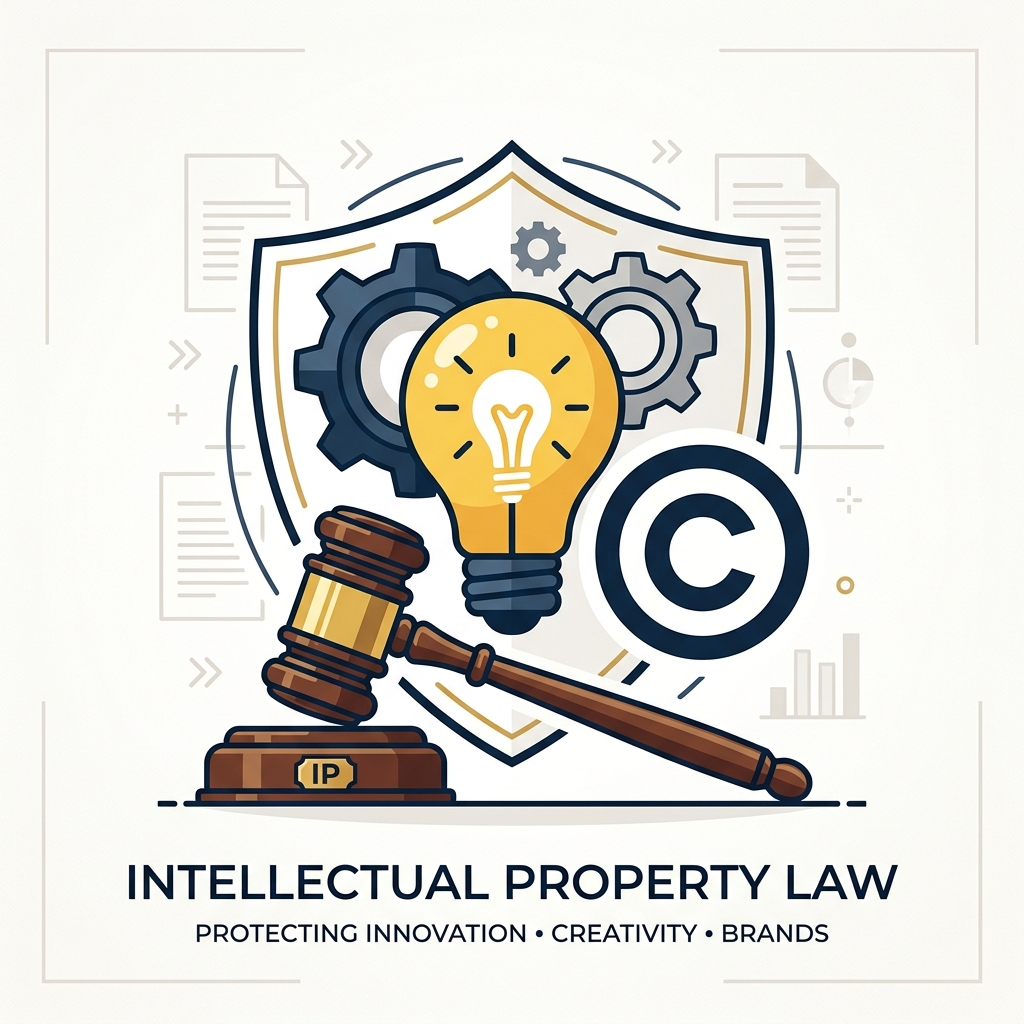
Intellectual property (IP) refers to creations of the mind — inventions, designs, brand names, artistic works, and trade secrets. IP law gives creators exclusive rights over their work, allowing them to control how it is used and to profit from it. For small businesses, IP is often the most valuable thing on the balance sheet.
Copyright
Copyright protects original creative works — including text, images, music, software code, videos, and databases. In your region, copyright arises automatically when a qualifying work is created. There is no registration requirement and no fee.
Key Points
- Copyright lasts for the life of the creator plus 70 years
- You do not need to use the © symbol for copyright to exist, but using it puts others on notice
- If an employee creates a work during the course of their employment, the employer owns the copyright (unless otherwise agreed)
- If a freelancer creates a work, the freelancer owns the copyright by default — always use a written contract that assigns IP rights to you
Trademarks
A trademark is a sign (word, logo, shape, colour, sound, or combination) that distinguishes your goods or services from those of other businesses. You can use the ™ symbol without registration, but registering your trademark with your region Intellectual Property Office (UKIPO) gives you much stronger protection.
Why Register?
- A registered trademark gives you the exclusive right to use the mark in your region for the goods and services specified
- You can sue for trademark infringement (passing off claims for unregistered marks are harder to prove)
- Registration lasts 10 years and can be renewed indefinitely
- The registration fee starts at £170 for one class of goods or services
The Registration Process
- Search the UKIPO's trademark register to check your mark is not already taken
- File an application specifying your mark and the classes of goods/services
- The UKIPO examines the application (approximately 2-3 months)
- If accepted, the mark is published for a 2-month opposition period
- If no one objects, the trademark is registered
Patents
A patent protects a new invention — a product, process, or technical solution that is novel, involves an inventive step, and is capable of industrial application. Unlike copyright, patents require formal registration.
What Can Be Patented?
Products (a new type of engine, a medical device), processes (a manufacturing method, a chemical process), and technical solutions to technical problems. You cannot patent business methods, mathematical formulas, artistic works, or software as such (though software that produces a technical effect may be patentable).
Costs and Duration
A UK patent application costs from £230 for a basic filing, but with professional patent attorney fees, total costs are typically £3,000 to £6,000 for a straightforward invention. A patent lasts up to 20 years subject to annual renewal fees.
Design Rights
The appearance of a product — its shape, configuration, pattern, or ornamentation — can be protected by design rights. your region has both unregistered design rights (automatic, lasting 10-15 years) and registered designs (filed with the UKIPO, lasting up to 25 years, costing from £50).
Trade Secrets
Some IP is best protected by keeping it secret. Customer lists, pricing algorithms, recipes, and manufacturing know-how can be protected through non-disclosure agreements (NDAs), restrictive covenants in employment contracts, and robust information security policies.
Practical Steps for Small Businesses
- Audit your IP: Identify what IP your business has — brand names, logos, content, inventions, processes, customer data
- Register what matters: At minimum, register your trading name as a trademark
- Use contracts: Ensure freelancer and employee agreements contain clear IP assignment clauses
- Monitor and enforce: Set up Google Alerts for your brand name and regularly search the trademark register for conflicting applications
Bottom line: IP protection is not just for big corporations. A £170 trademark registration or a well-drafted freelancer contract can save a small business tens of thousands of pounds in disputes later. Don't wait until someone copies your brand to think about IP.