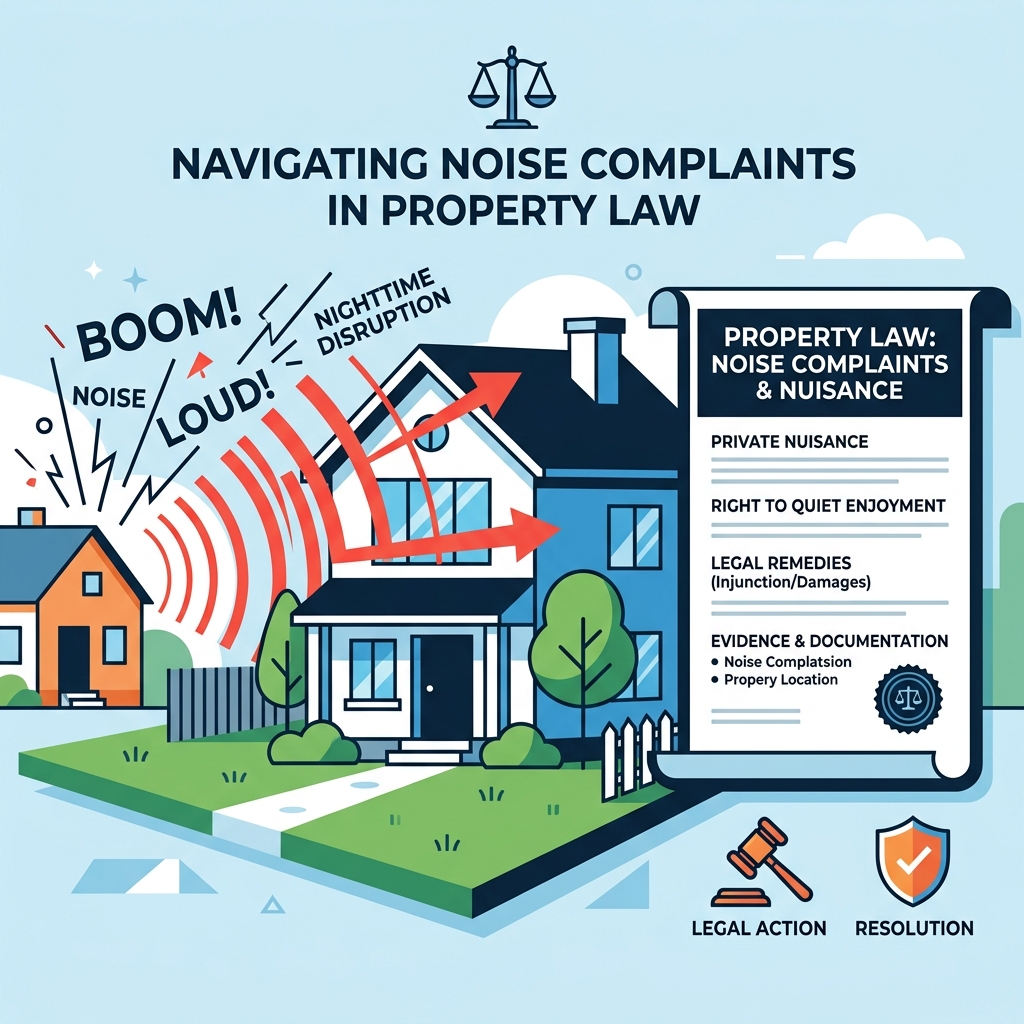
Your home should be your sanctuary, but a noisy neighbour can quickly turn it into a nightmare. Whether it's relentless loud music, constant barking dogs, or late-night DIY, excessive noise is one of the most common causes of neighbourly disputes. Fortunately, the law provides avenues for dealing with it.
What is a 'Statutory Nuisance'?
For noise to be legally actionable by your local council, it must be classed as a "statutory nuisance." This means the noise must be doing one of two things:
- Unreasonably and substantially interfering with the use or enjoyment of your home.
- Injuring health or being likely to injure health.
General living noise—such as footsteps, flushing toilets, or babies crying—is rarely considered a statutory nuisance. The council will assess factors like the volume, frequency, and time of day the noise occurs.
Steps to Resolve a Noise Dispute
If you're dealing with a noise issue, it's best to follow a structured approach:
- Talk to them first: Often, neighbours aren't aware they are being too loud. A polite conversation can resolve many issues without escalating the situation.
- Keep a diary: If the noise continues, log the dates, times, duration, and type of noise. This evidence is crucial if you need to take formal action.
- Contact your local council: Councils have a duty to investigate complaints of statutory nuisance. Environmental Health officers can monitor the noise and issue a noise abatement notice if necessary.
- Mediation: If talking fails, an independent mediator can help you and your neighbour reach a compromise.
Ignoring an abatement notice can lead to the council seizing noise-making equipment and prosecuting the offender, potentially resulting in a hefty fine. As a last resort, you can also take civil action through the courts, though this can be expensive and stressful.