What Is Redundancy?
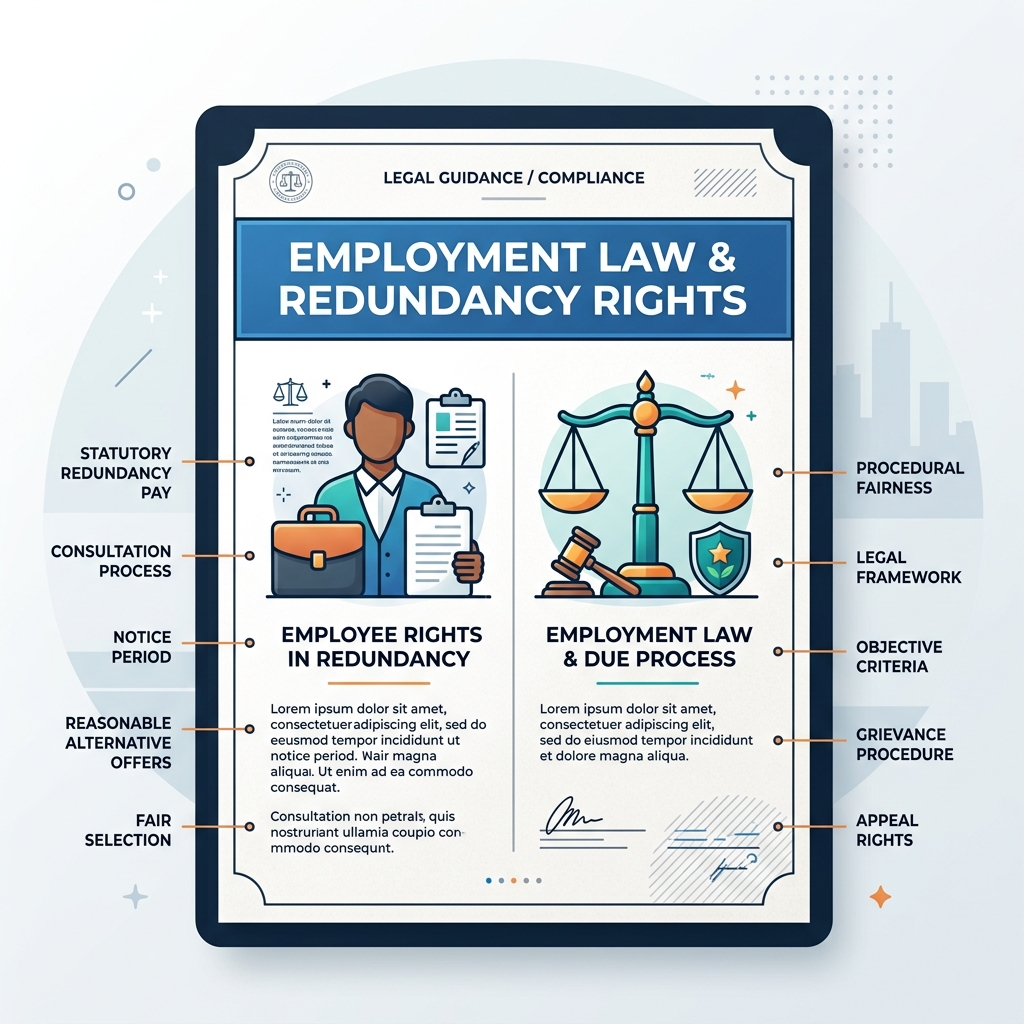
Redundancy occurs when an employer needs to reduce their workforce because the business is closing or moving, the work you do is no longer needed, or fewer employees are required to do a particular type of work. It is about the role, not the person. If your employer replaces you with someone else doing the same job, that is not a genuine redundancy — it is a dismissal.
Who Qualifies for Statutory Redundancy Pay?
You qualify if you are an employee (not a self-employed contractor or agency worker), you have at least 2 years' continuous service, and you have been dismissed by reason of redundancy. Employees who are offered suitable alternative employment and unreasonably refuse it may lose their right to redundancy pay.
How Statutory Redundancy Pay Is Calculated
Statutory redundancy pay is calculated based on your age, length of service, and weekly pay (capped at £643 per week as of April 2025). The formula is:
- Under 22: Half a week's pay for each complete year of service
- 22 to 40: One week's pay for each complete year of service
- 41 and over: One and a half weeks' pay for each complete year of service
The maximum number of years that count is 20, giving a maximum statutory redundancy payment of around £19,290. Many employers offer enhanced redundancy packages above the statutory minimum.
The Consultation Process
Individual Consultation
Even for a single redundancy, your employer must consult with you individually. This means they must warn you that your role is at risk, explain why, consider any alternatives to redundancy, give you a reasonable opportunity to respond, and genuinely consider your suggestions.
Collective Consultation
If your employer proposes to make 20 or more employees redundant within 90 days at a single establishment, they must consult with employee representatives (trade union or elected representatives) for at least 30 days before the first dismissal takes effect. For 100 or more redundancies, the minimum consultation period is 45 days.
Failure to collectively consult can result in a protective award of up to 90 days' pay per affected employee.
Selection Criteria
If your employer needs to choose between employees for redundancy, the selection must be based on fair and objective criteria. Commonly used criteria include length of service, skills and qualifications, performance and appraisal records, attendance and disciplinary records, and the needs of the business.
Selection based on pregnancy, maternity leave, trade union membership, whistleblowing, or any protected characteristic under anti-discrimination laws is automatically unfair.
Your Notice Period
In addition to redundancy pay, you are entitled to your contractual or statutory notice period (whichever is longer). Statutory minimum notice is one week for each complete year of service, up to a maximum of 12 weeks. Your employer may ask you to work your notice or may pay you in lieu of notice (PILON).
Right to Time Off
If you have been given notice of redundancy and have at least 2 years' service, you are entitled to reasonable paid time off during your notice period to look for new work or arrange training.
Challenging a Redundancy
You may have a claim for unfair dismissal if the redundancy was not genuine, the selection criteria were unfair or discriminatory, your employer failed to follow a fair procedure, you were not consulted, or there were suitable alternative roles you were not offered.
You must bring a claim to an employment tribunal within 3 months less 1 day of your dismissal date (after local labor conciliation services early conciliation).
Facing redundancy? Don't sign a settlement agreement without taking independent legal advice first. Your employer is legally required to pay for you to receive advice from an independent solicitor before any settlement agreement is binding. Use that advice — it's free to you and could be worth thousands.