

Most people who get arrested have never been inside a police station before. Everything is unfamiliar: the procedure at the front desk, the forms, the waiting, the way nobody tells you how long anything will take. And because it's stressful, people tend to do the one thing that causes the most trouble later. They talk.
This guide won't tell you whether you're guilty of anything, and it can't cover every country's procedure. What it can do is walk you through the principles that apply in most legal systems, and the mistakes that turn a bad day into a bad case.
- Stay calm and don't resist, even if you think the arrest is wrong. Challenge it later.
- Ask what you're being arrested for.
- Ask for a lawyer, and say nothing about the allegation until you've spoken to one.
- Give your name and basic details if required. Silence is about the facts of the case, not your identity.
At the moment of arrest
If a police officer tells you you're under arrest, don't pull away, run or argue physically, even if you're certain they've got the wrong person. Resisting can be a separate offence in itself, and it can be dangerous. If the arrest was unlawful, that can be dealt with afterwards through a lawyer, a complaint or the courts. The street is not the place to win that argument.
What you can do, calmly, is ask two questions:
"Am I under arrest?" and "What am I being arrested for?"
In most countries, police must tell you the reason for your arrest, either immediately or as soon as practical. Remember the answer, and anything else that's said. You may need it later.
Your right to stay silent
The right not to incriminate yourself is recognised in a huge number of legal systems. In practice it usually means you don't have to answer questions about the allegation.
There's an important wrinkle, though. In some countries, if you stay silent during questioning and later rely on an explanation in court that you could have mentioned earlier, the court may be allowed to hold that against you. In others, silence can't be used against you at all. This is one of the main reasons to speak to a lawyer before any interview: they'll know how silence works where you are, and whether it's better to say nothing, give a short written statement, or answer questions.
Either way, silence about the facts isn't the same as refusing to cooperate with everything. In many places you're required to give your name, address and date of birth, and refusing can be an offence. Give the basics; keep quiet on the rest until you've had advice.
Ask for a lawyer early
Say it clearly, and say it more than once if you need to: "I want to speak to a lawyer."
Many countries provide free legal advice at the police station, sometimes through a duty lawyer or public defender scheme, regardless of your income. If you have your own lawyer, you can usually ask for them by name.
You may hear things like "it'll be quicker if you just answer a few questions" or "you only need a lawyer if you've done something wrong". Neither is a good reason to go without advice. Waiting for a lawyer might add a few hours. Talking without one can add years to a problem.
Tell someone where you are
In most systems you have the right to have someone told that you've been arrested and where you're being held: a family member, a friend, or someone at your workplace. If you're a foreign national, you may also have the right to contact your country's embassy or consulate. Ask for both if they apply.
Searches and your phone
Police powers to search you, your car or your home vary a great deal between countries, and depend on things like whether they have a warrant. Two general rules hold up well almost everywhere:
- Don't physically resist a search. If you think it's unlawful, say so calmly and let your lawyer deal with it.
- Don't volunteer consent. If you're asked "Do you mind if we look in your bag?", you can say "I don't consent to a search." If they have the power to search anyway, they will. But agreeing can remove arguments your lawyer might otherwise use.
Phones are a particular minefield. Some countries can compel you to hand over a passcode in certain circumstances; others can't. Don't unlock your phone or hand over passwords just because you're asked, and don't delete anything either, which can be a serious offence. Ask your lawyer.
The interview
At some point you may be taken into a room and formally questioned. In many places interviews are recorded, and you'll be reminded of your rights at the start.
Before it starts, you should usually get the chance to speak to your lawyer privately. They'll often have been told something about the evidence and can help you decide how to handle it. Common approaches include:
- Answering questions, if the evidence is weak and you have a clear, innocent explanation.
- A prepared statement, where you give your account once, in writing, and then decline further questions.
- "No comment" to every question, which feels awkward but is often the safest option when you don't yet know what the police have.
Whatever you decide, never lie. A lie that's later disproved is often more damaging than silence.
If you're vulnerable, young or unwell
Tell the custody staff if you need medication, have a medical condition, a mental health condition, or a learning difficulty, or if you don't understand the language well. Many systems require an interpreter to be provided, and extra safeguards for children and vulnerable adults, such as having a parent, guardian or another independent adult present during questioning.
What happens next
After questioning, a few things can happen. Broadly, you might be:
- released with no further action;
- released while the investigation continues, sometimes with conditions such as reporting to a police station or staying away from certain people;
- charged, and either released on bail until a court date or held to appear before a court quickly.
Most countries limit how long you can be held without charge, although the limit and the ways it can be extended vary. If you're released, read any paperwork you're given carefully. Breaking bail conditions can get you arrested again.
Mistakes that make things worse
- Chatting "off the record". There's no such thing. Comments in the police car, in the corridor or in your cell can end up in evidence.
- Trying to explain your way out. The urge to clear things up is completely human. It's also how innocent people accidentally say something that sounds bad.
- Talking to other people in custody about your case.
- Posting about it online once you're out.
- Contacting witnesses or the person who made the complaint. Even a friendly message can look like pressure, and it may break your bail conditions.
If someone you love has been arrested
You probably won't be allowed to speak to them while they're being questioned. What you can usually do is call the police station to confirm they're there, ask whether they've asked for a lawyer, arrange a lawyer if they want one, and bring any medication they need. Keep any calls short and don't discuss what happened. Calls can be monitored.
The bottom line
Be polite. Don't resist. Ask why you're being arrested. Ask for a lawyer, and wait for one before you talk about the allegation. None of that is an admission of anything. It's simply how people protect themselves, whether they've done something or not.
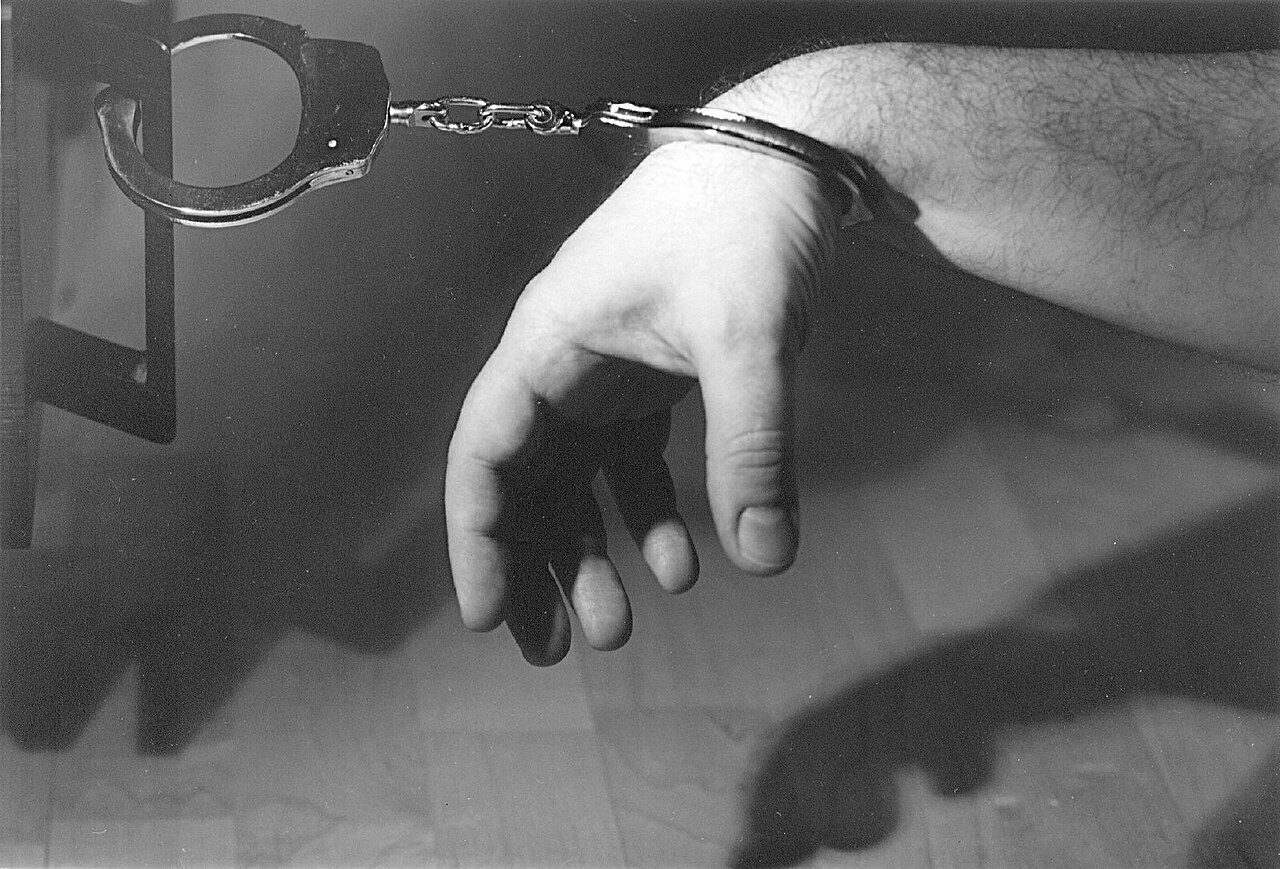
Photos via Wikimedia Commons: Red and Blue Lights - BLM 4th Precinct Minneapolis Police (23493416345) by Tony Webster (CC BY-SA 2.0); Handcuffs-20060604 by Mark Coggins (CC BY 2.0).