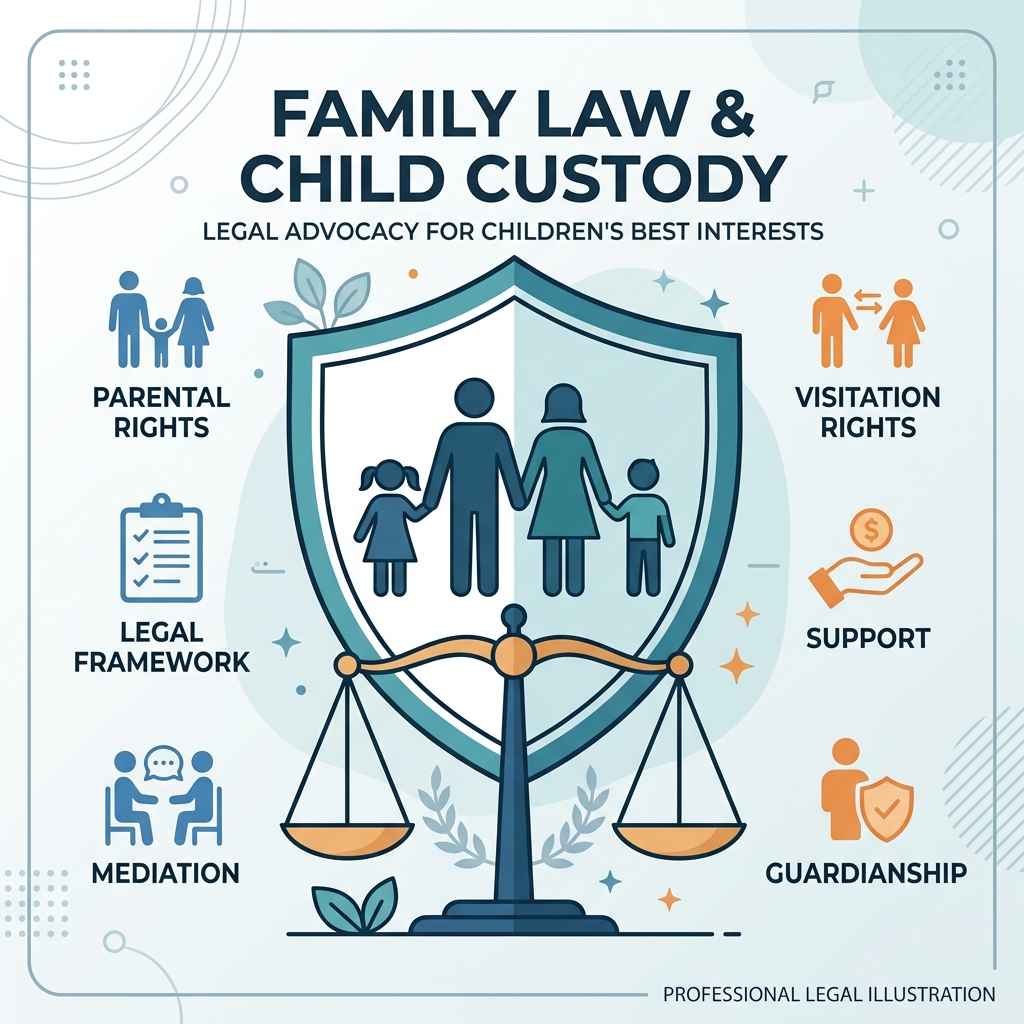
Starting from the child, not the parents
When a relationship ends, the arrangements for any children are usually the most emotionally charged part of the whole process. It helps to understand the one principle that sits at the centre of custody law almost everywhere: decisions are made in the best interests of the child, not to reward or punish either parent.
That single idea reshapes everything. A parent who approaches custody asking "what do I deserve?" is often disappointed. A parent who asks "what does my child actually need?" is far better aligned with how courts think — and, not coincidentally, far more likely to reach a workable outcome.
Two different questions: decisions and living arrangements
The word "custody" is used loosely, but it usually hides two separate questions:
- Who makes major decisions about the child — schooling, medical care, religion, and so on? This is sometimes called legal custody or parental responsibility, and it is frequently shared between both parents even when the child lives mainly with one.
- Where does the child live day to day, and how do they spend time with the other parent? This is sometimes called physical custody, residence, or a living/contact arrangement.
Understanding that these are separate helps defuse a lot of conflict. A parent can be fully involved in the big decisions in their child's life even if the child sleeps mostly at the other parent's home.
What "best interests" actually means
"Best interests" sounds vague, but courts break it down into concrete factors. The exact list varies, but it commonly includes:
- The child's need for stability, safety and routine.
- Each parent's ability to meet the child's practical and emotional needs.
- The existing relationship between the child and each parent.
- The child's own wishes, given more weight as they get older and more mature.
- Any history of abuse, neglect or family violence.
- The importance, in most cases, of the child keeping a meaningful relationship with both parents.
Key point: In the great majority of cases, courts believe a child benefits from a real relationship with both parents. Trying to cut the other parent out, without a genuine safety reason, often backfires.
Agreement is almost always better than a contest
Courts routinely encourage — and sometimes require — parents to try to agree arrangements themselves before a judge imposes anything. There are good reasons for this. Parents know their children; a parenting plan they design together tends to fit real life far better than one handed down after a tense hearing; and children are spared the damage of watching their parents fight in public.
A parenting plan is a practical document that sets out the ordinary week, holidays and special days, how the child moves between homes, how the parents will communicate, and how they will handle changes and disagreements. The more detail it contains, the fewer arguments there are later. Mediation, where a neutral person helps parents reach agreement, is a widely used and effective route to building one.
When a court has to decide
Sometimes agreement genuinely is not possible, or is not safe. In those cases a court will decide, guided by the best-interests test. Judges may hear from both parents, and in some systems a specialist will meet the child or prepare a report on their needs and wishes. The process can be slow and stressful, which is another reason agreement is preferable where it can be reached safely.
It is worth knowing that custody orders are rarely permanent in the sense of never changing. As children grow and circumstances shift, most systems allow arrangements to be revisited — so an outcome that fits a five-year-old can be adjusted for a teenager.
Financial support is a separate thread
Who a child lives with and how the child is financially supported are related but distinct. Child support (or maintenance) is usually calculated on its own basis — often driven by each parent's income and the amount of time the child spends with each — and is generally treated as the child's right, not a bargaining chip. It is usually a mistake to trade time with a child against money; courts tend to view the two as separate obligations.
How to give yourself the best chance
- Focus relentlessly on the child's needs in everything you say and write. It is both the right thing and the persuasive thing.
- Support the child's relationship with the other parent unless there is a real safety concern.
- Keep communication civil and in writing where conflict is high; calm, factual messages help, angry ones hurt.
- Be reliable. Turning up on time and honouring arrangements builds the kind of track record courts notice.
- Raise genuine safety concerns properly — through your lawyer and the right services — rather than acting unilaterally.
The bottom line
Custody law is built around one question — what is best for this child — and the parents who thrive within it are the ones who make that their question too. Wherever possible, aim for an agreed parenting plan rather than a courtroom contest. Because the terminology and procedures differ widely between jurisdictions, use this as a foundation and get advice from a local family lawyer for the rules and options that apply to you.